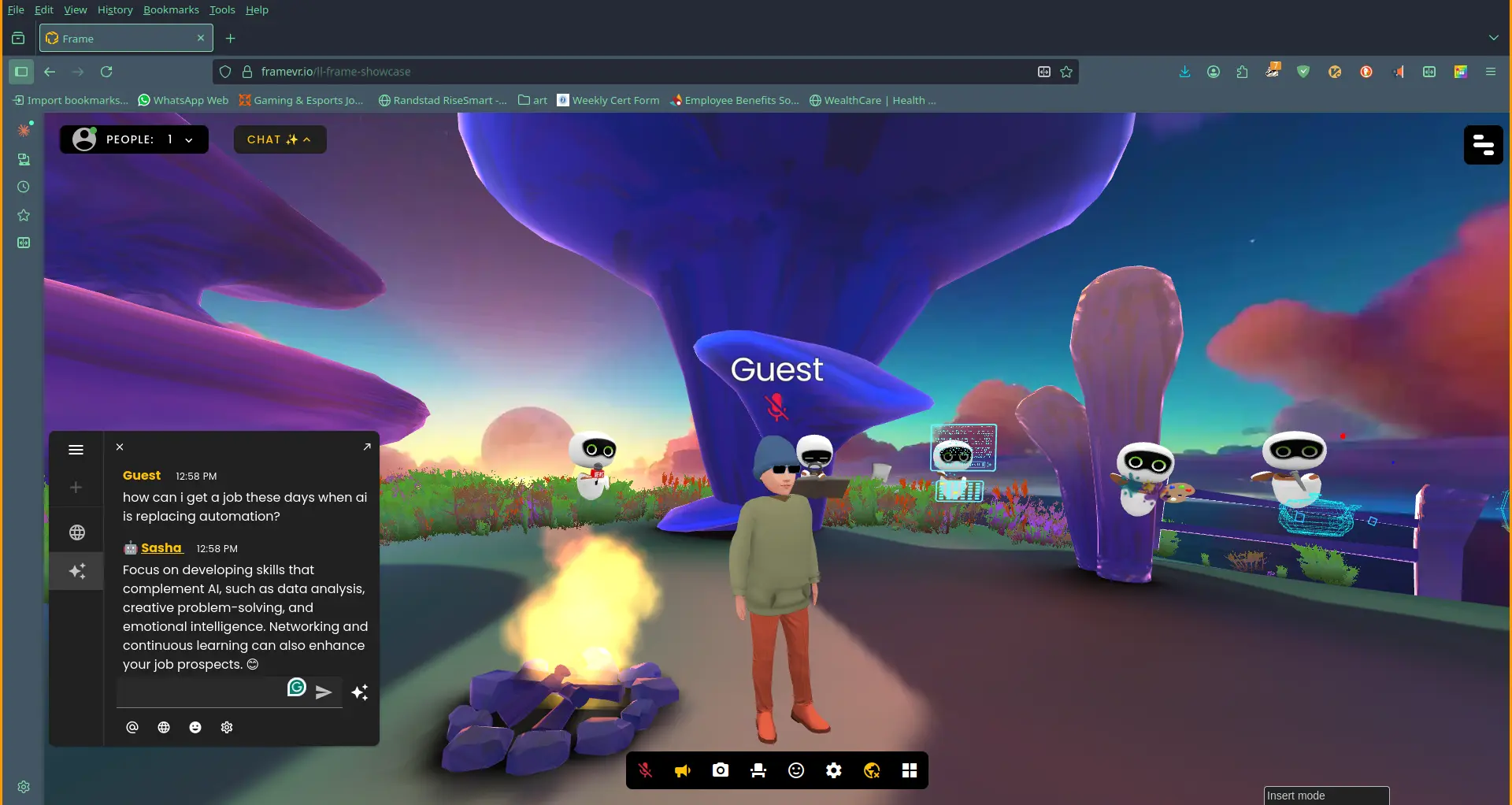
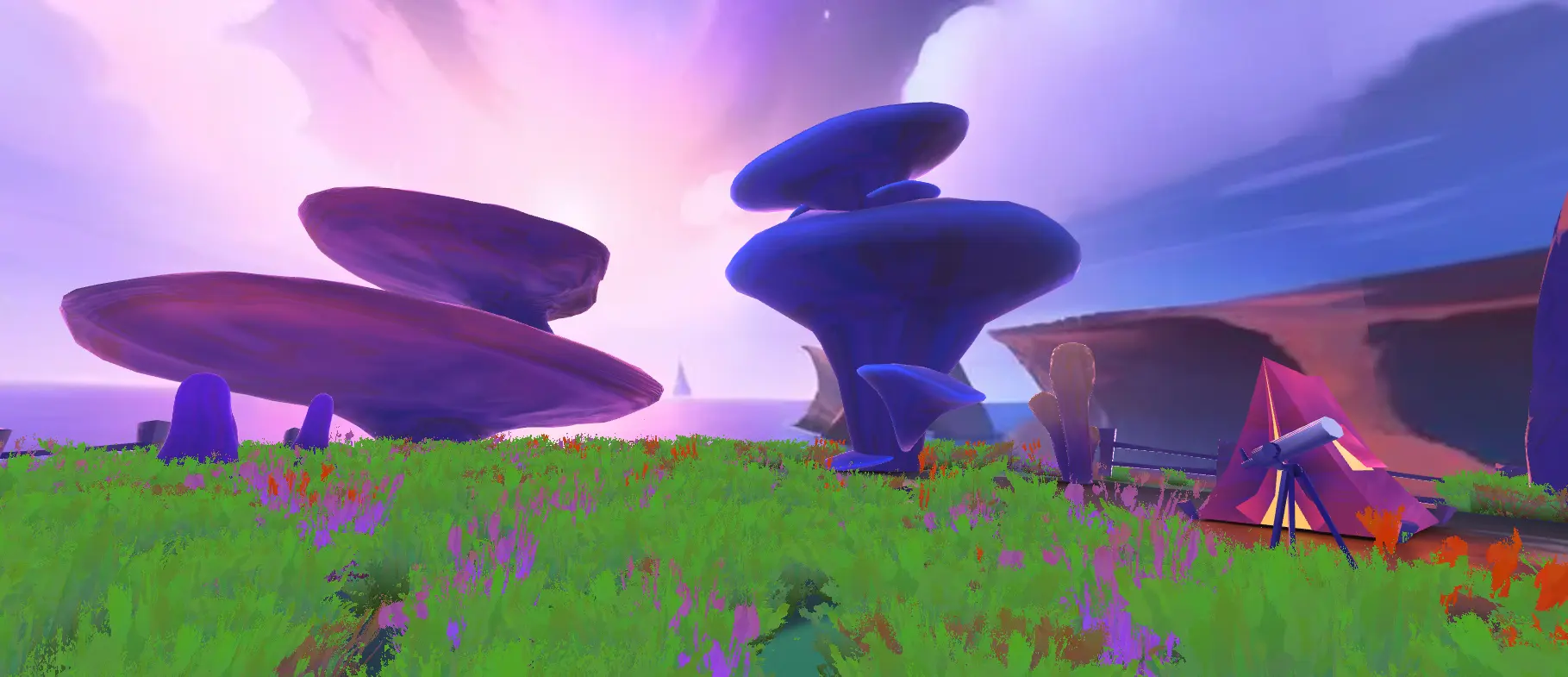
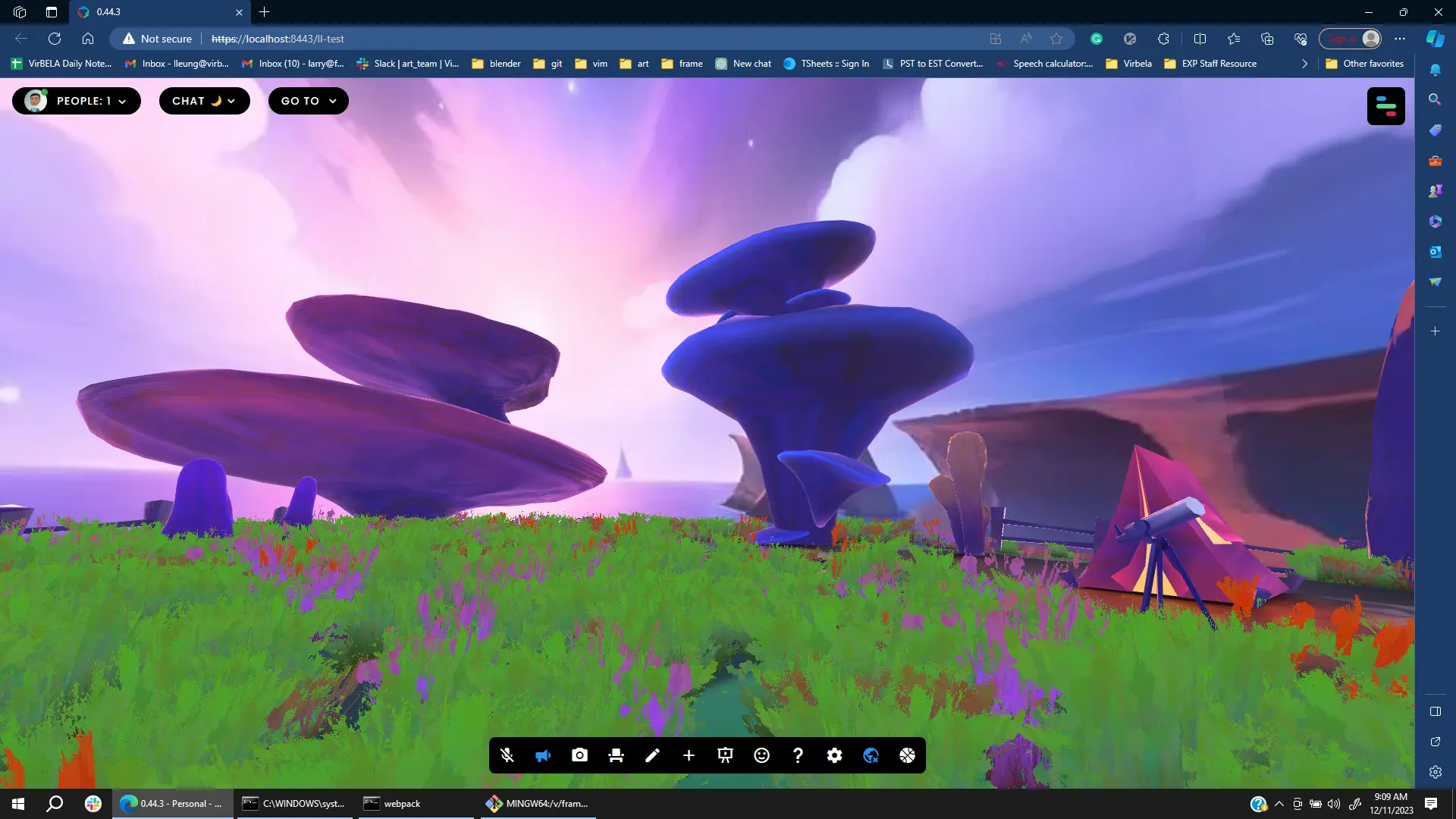
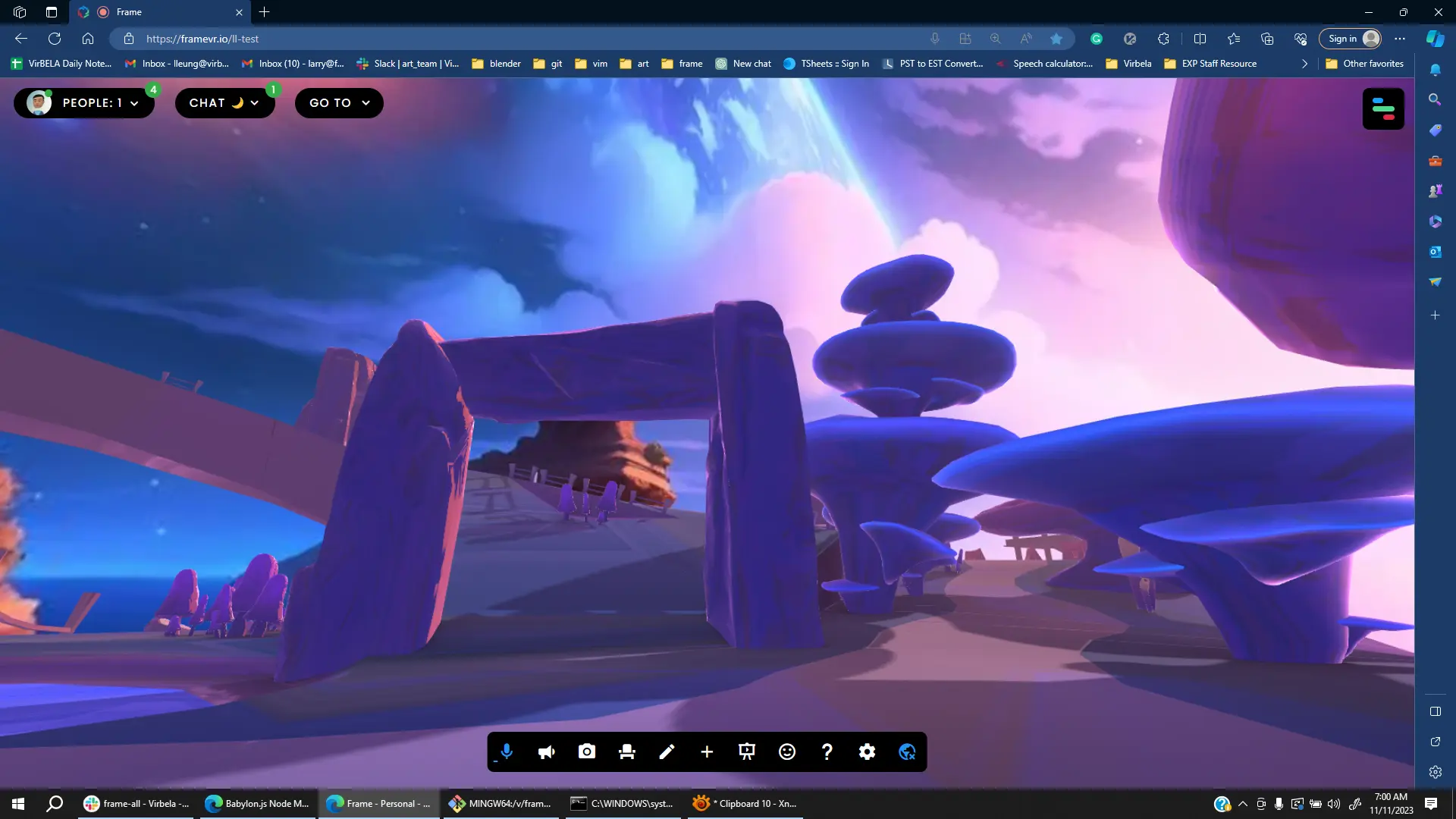
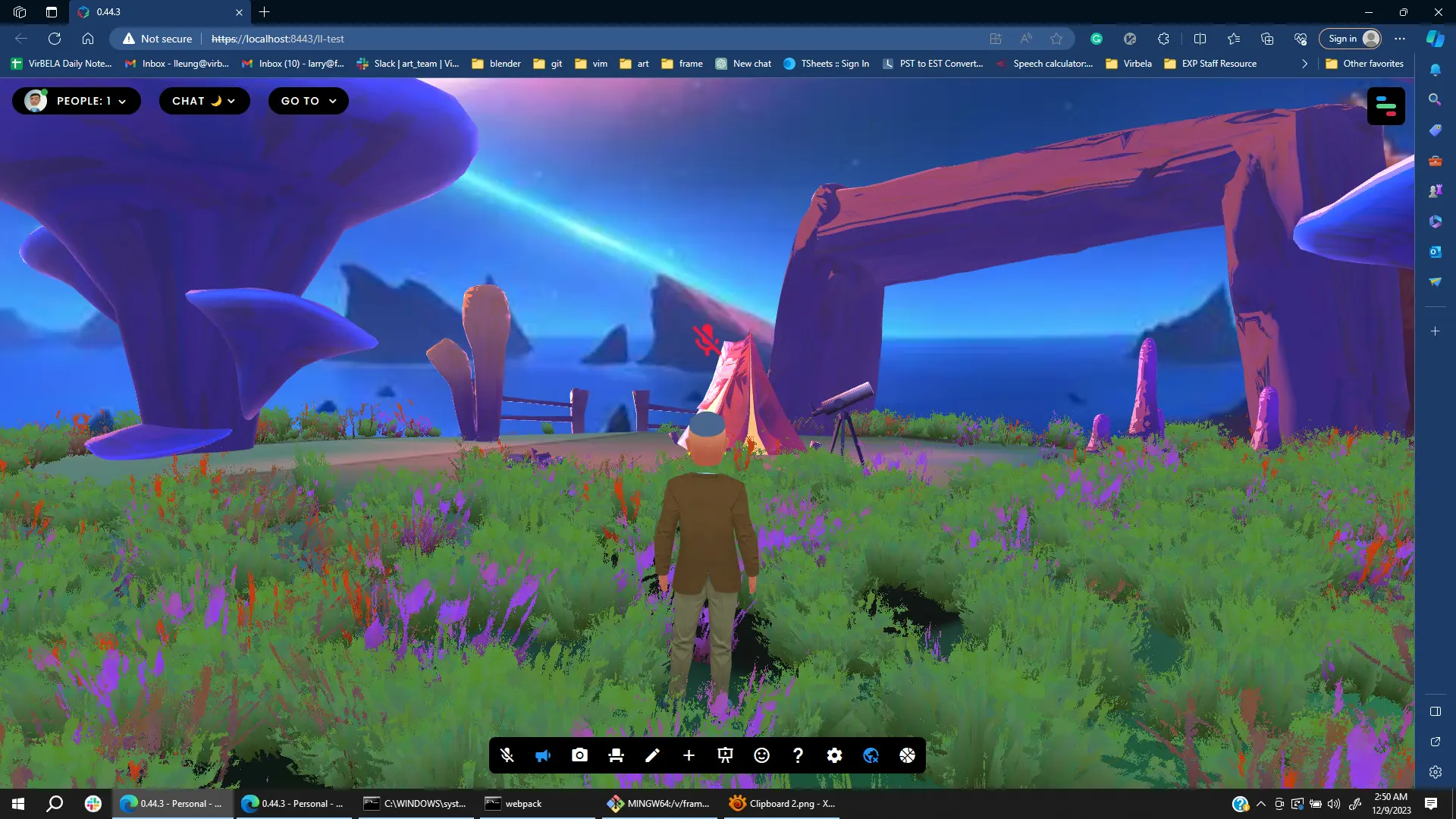
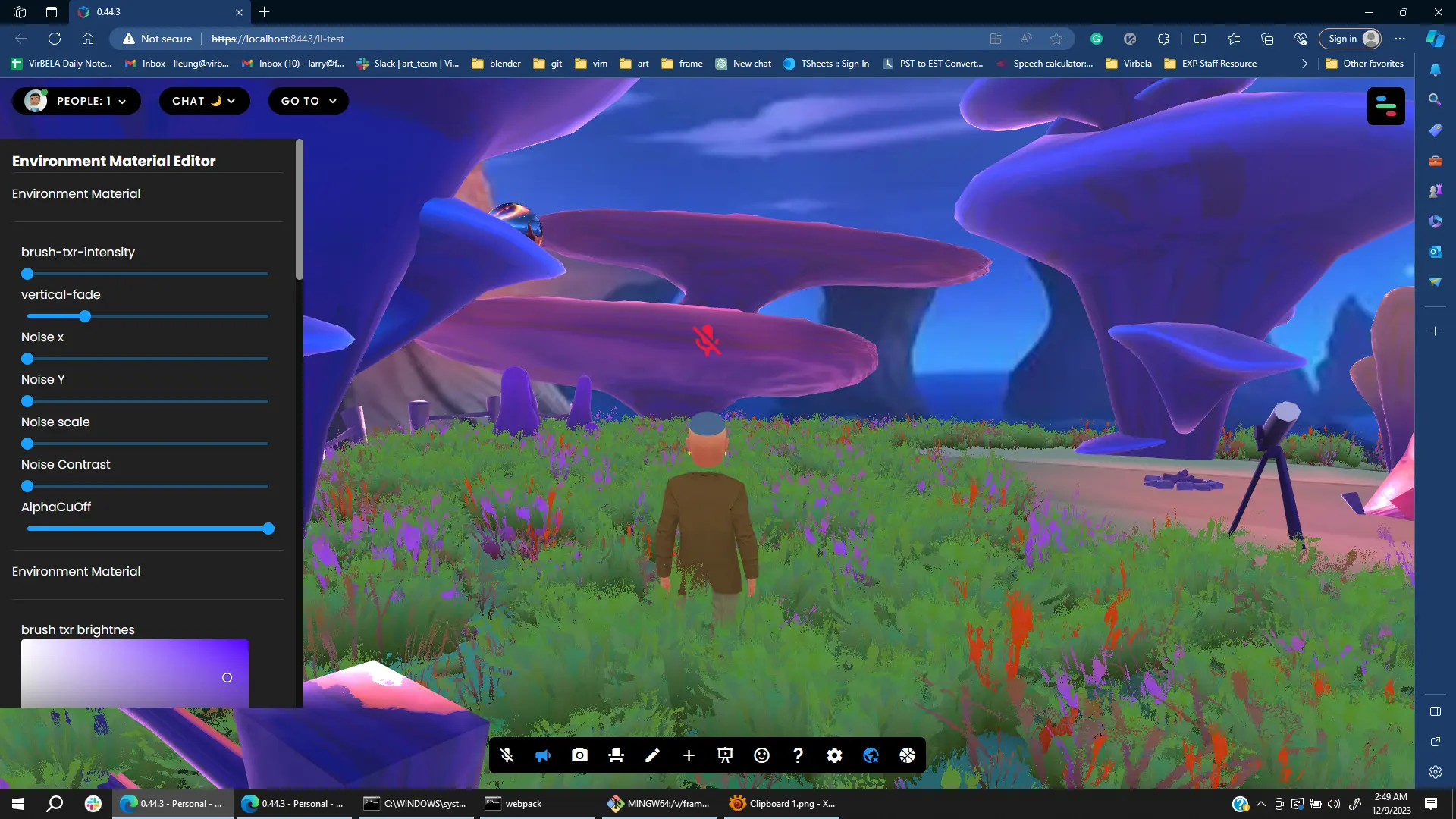
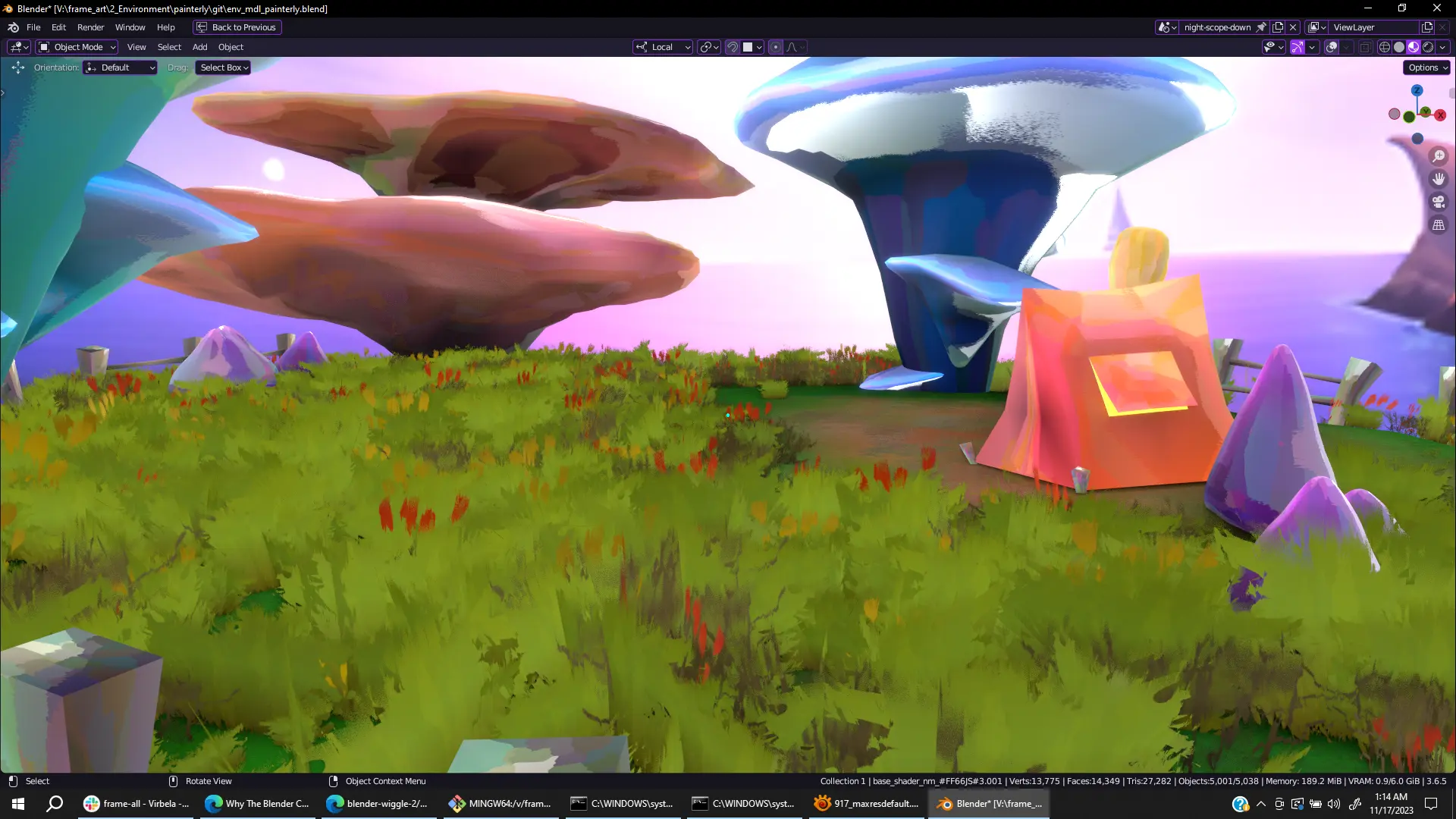
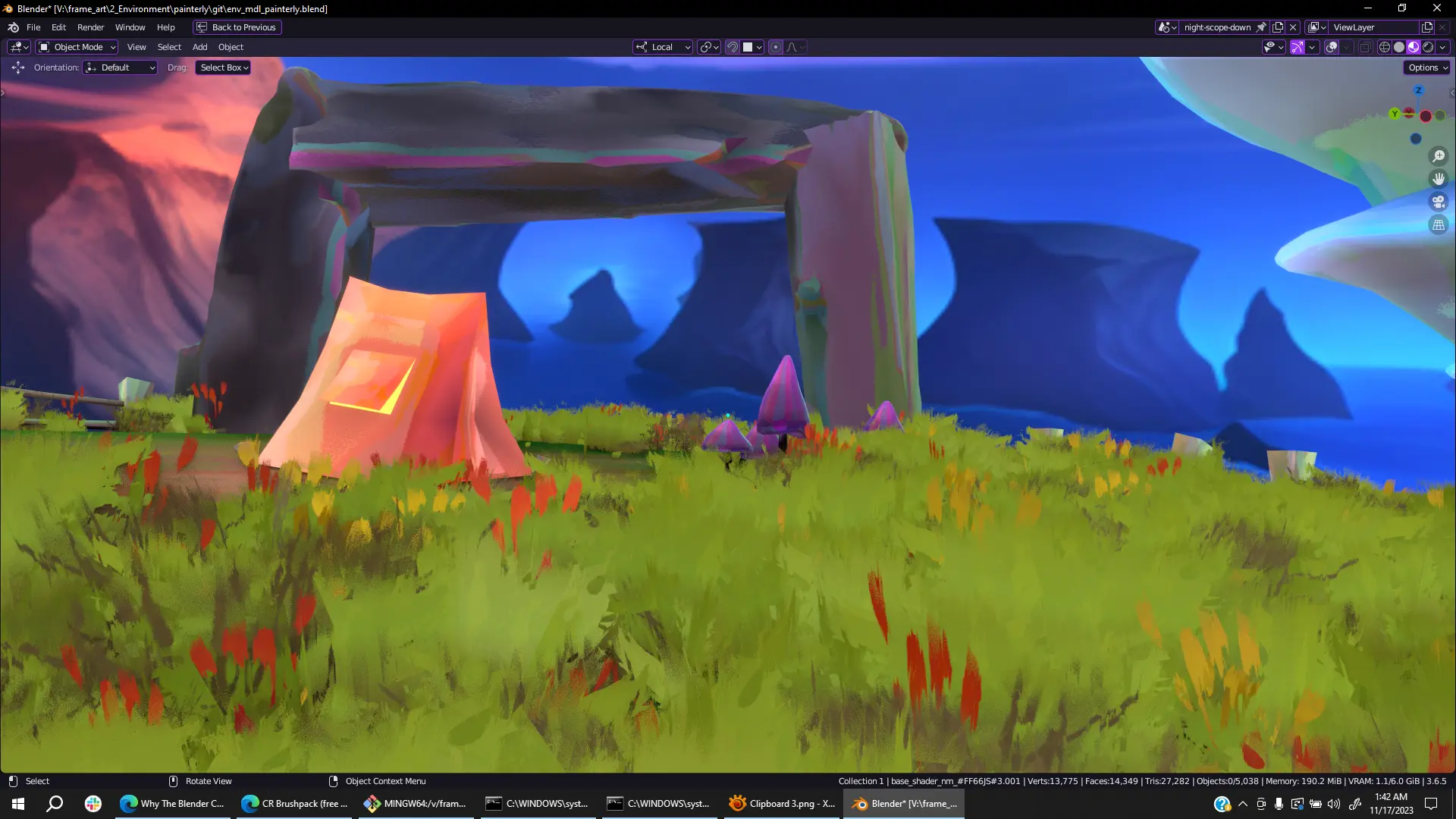
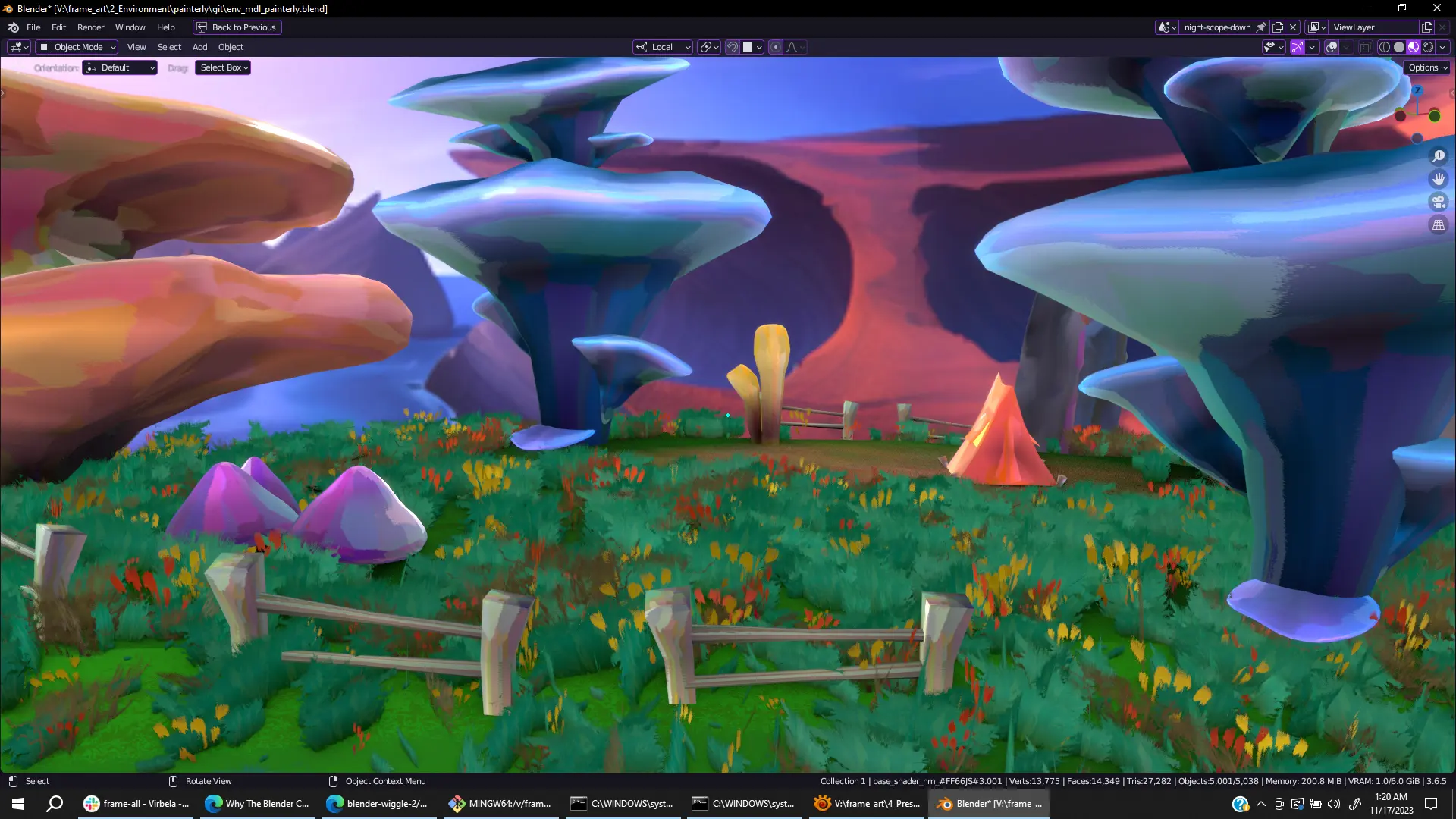
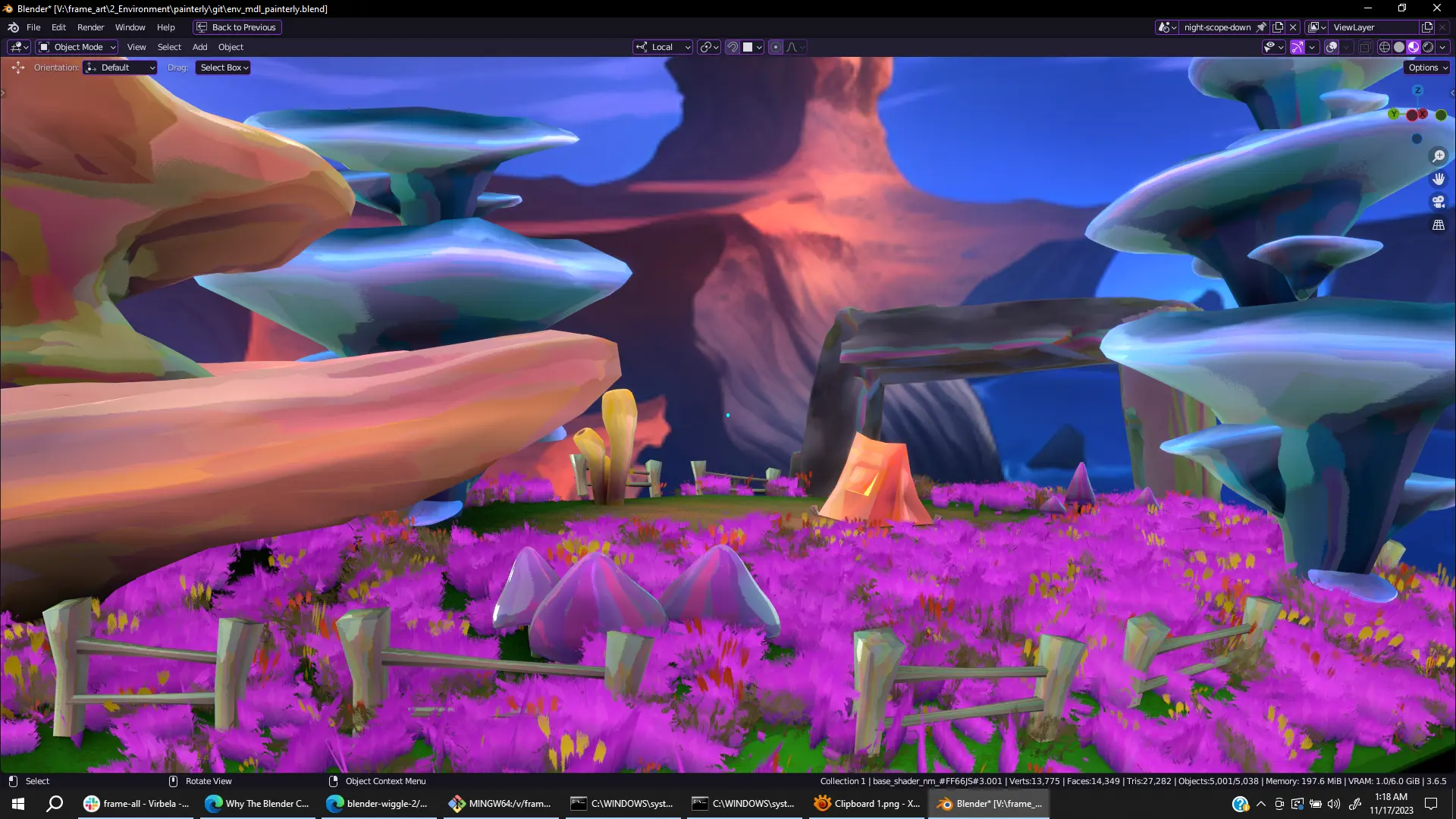
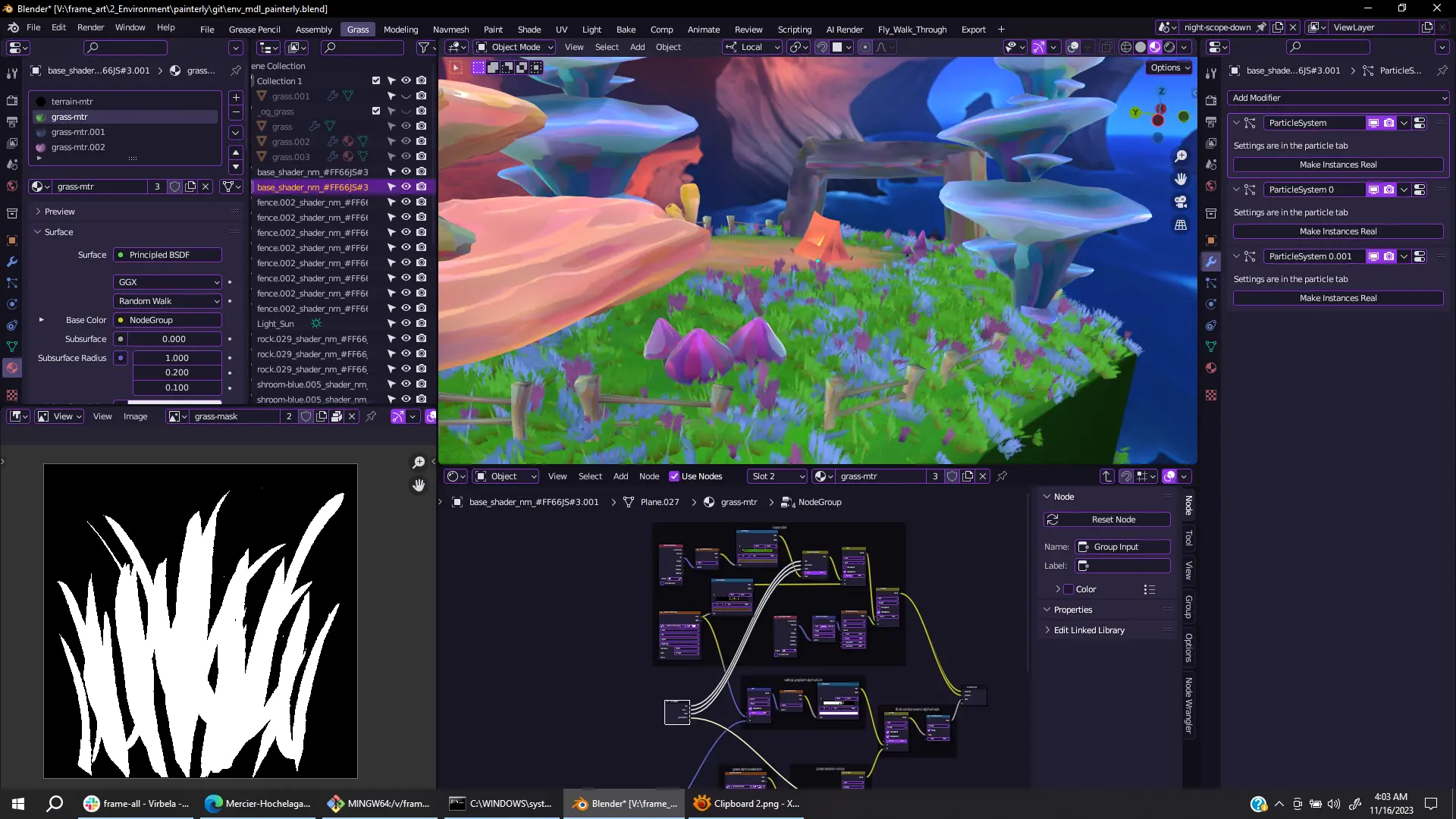
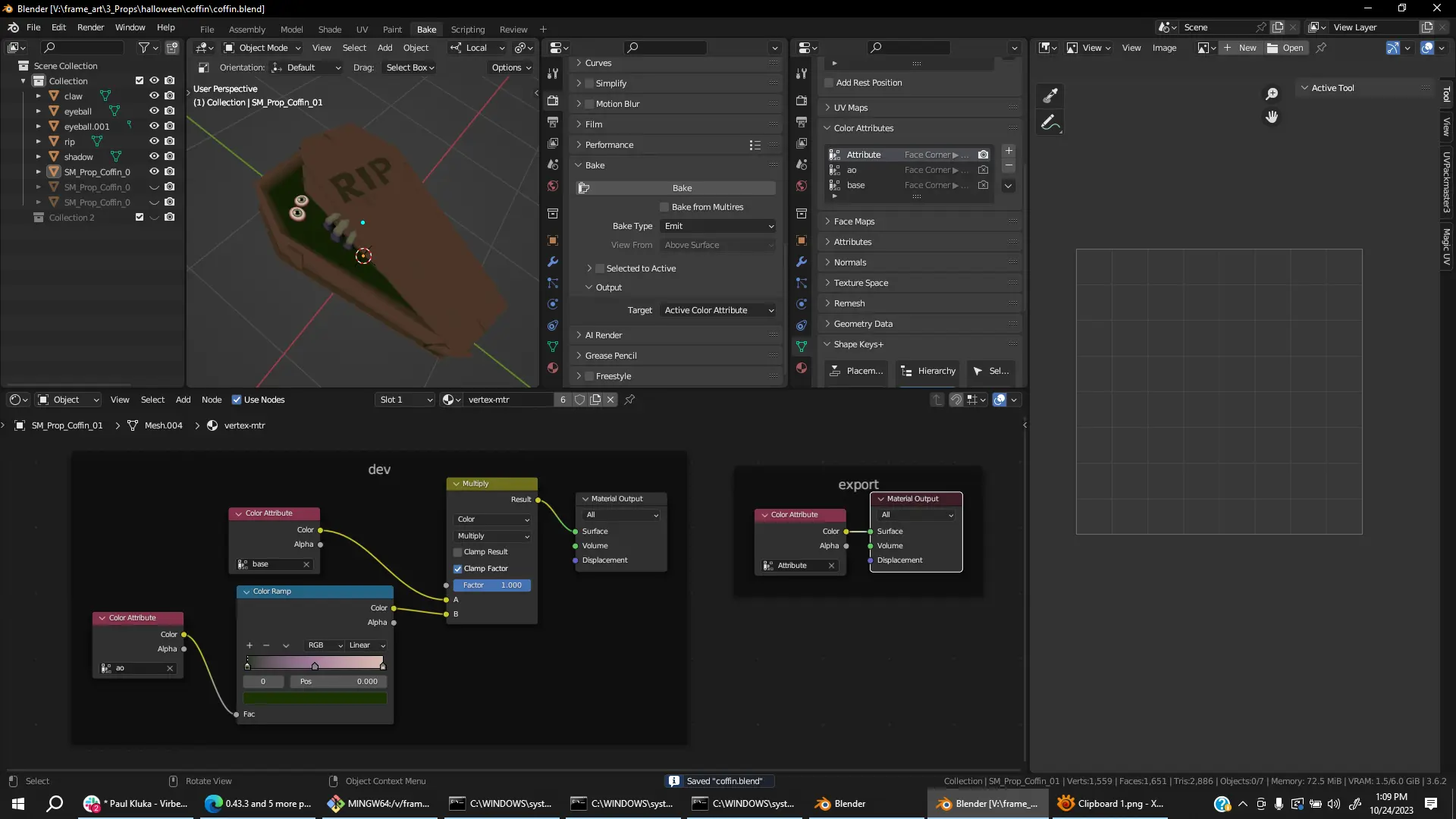
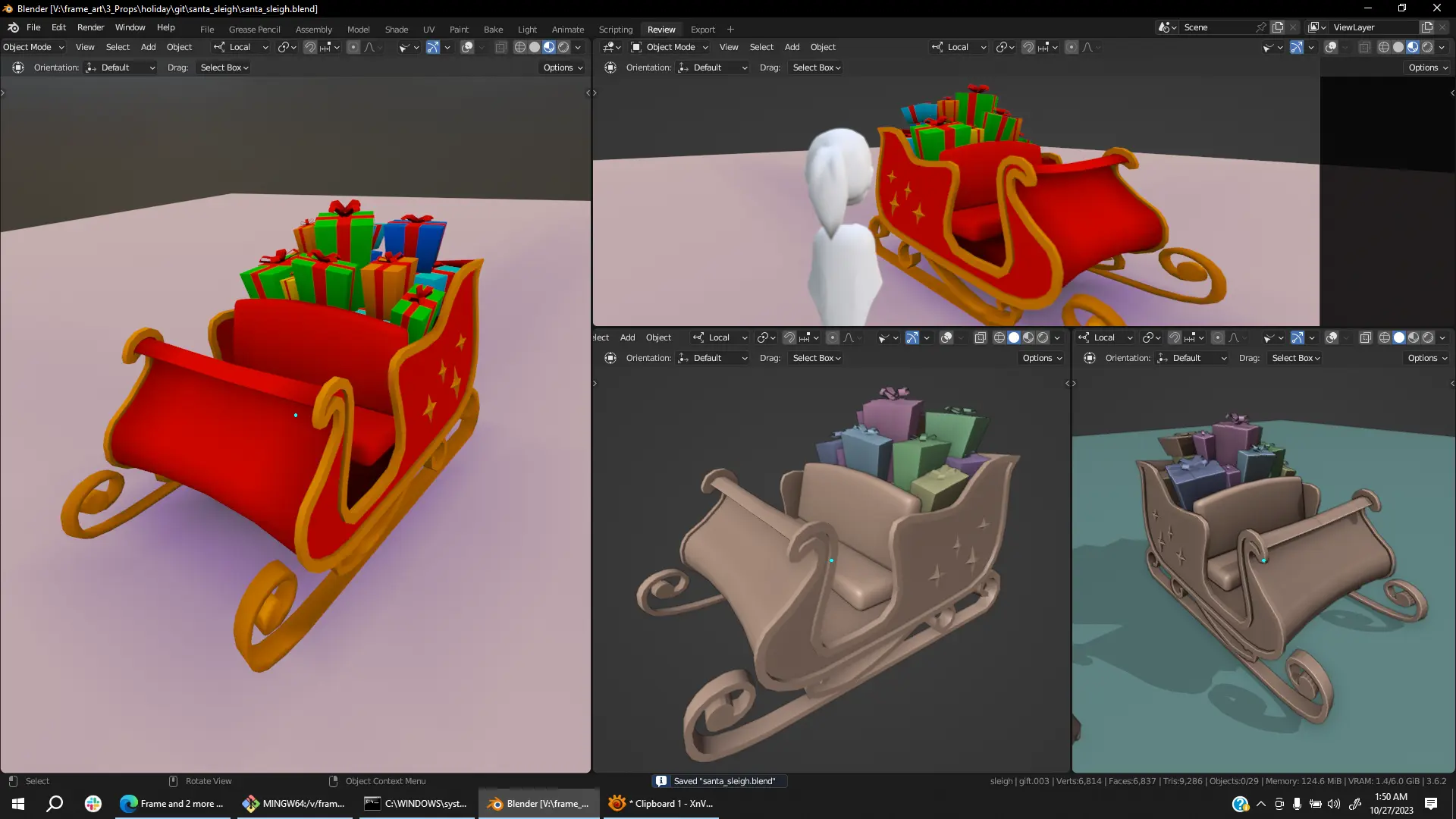
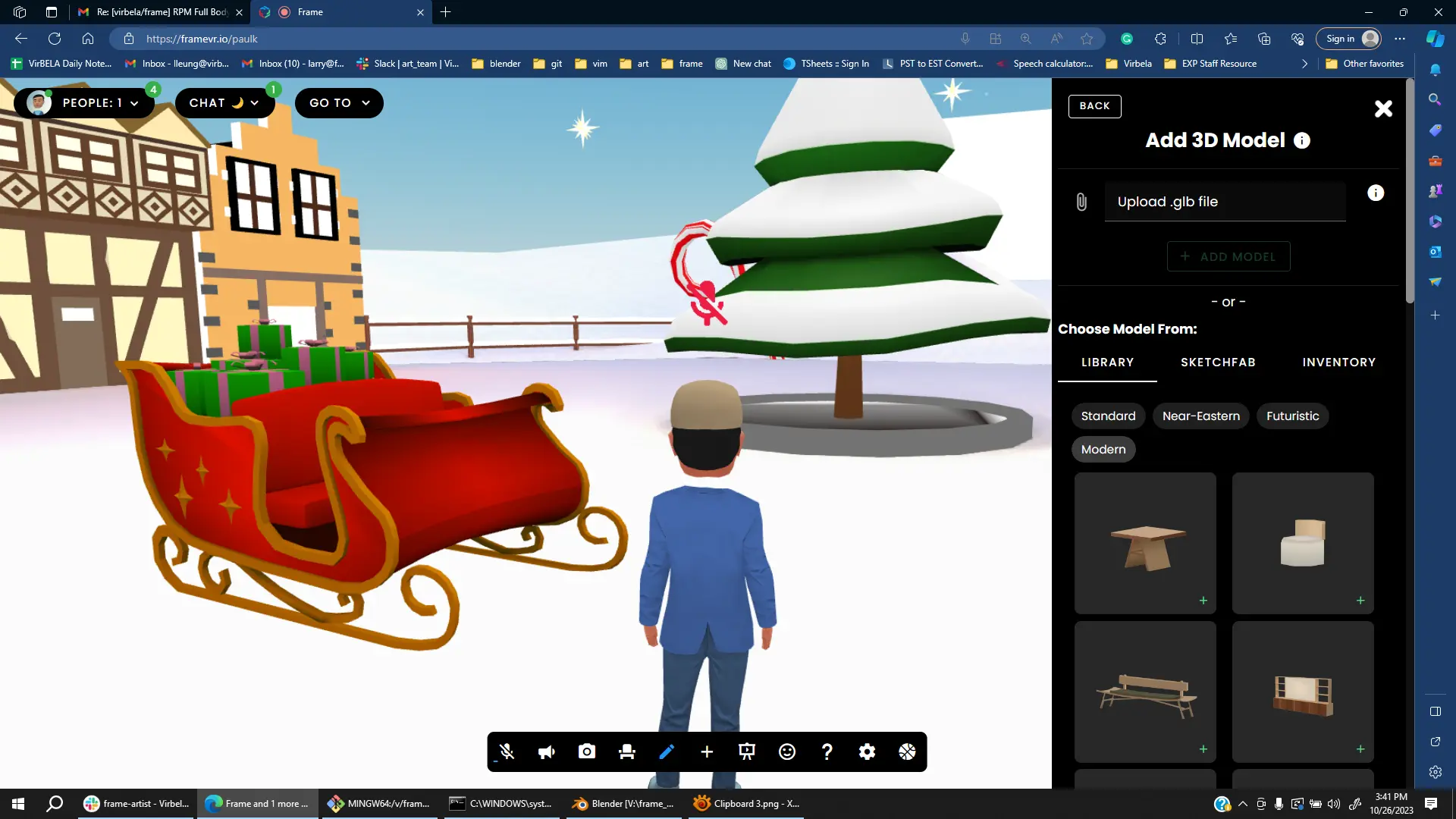
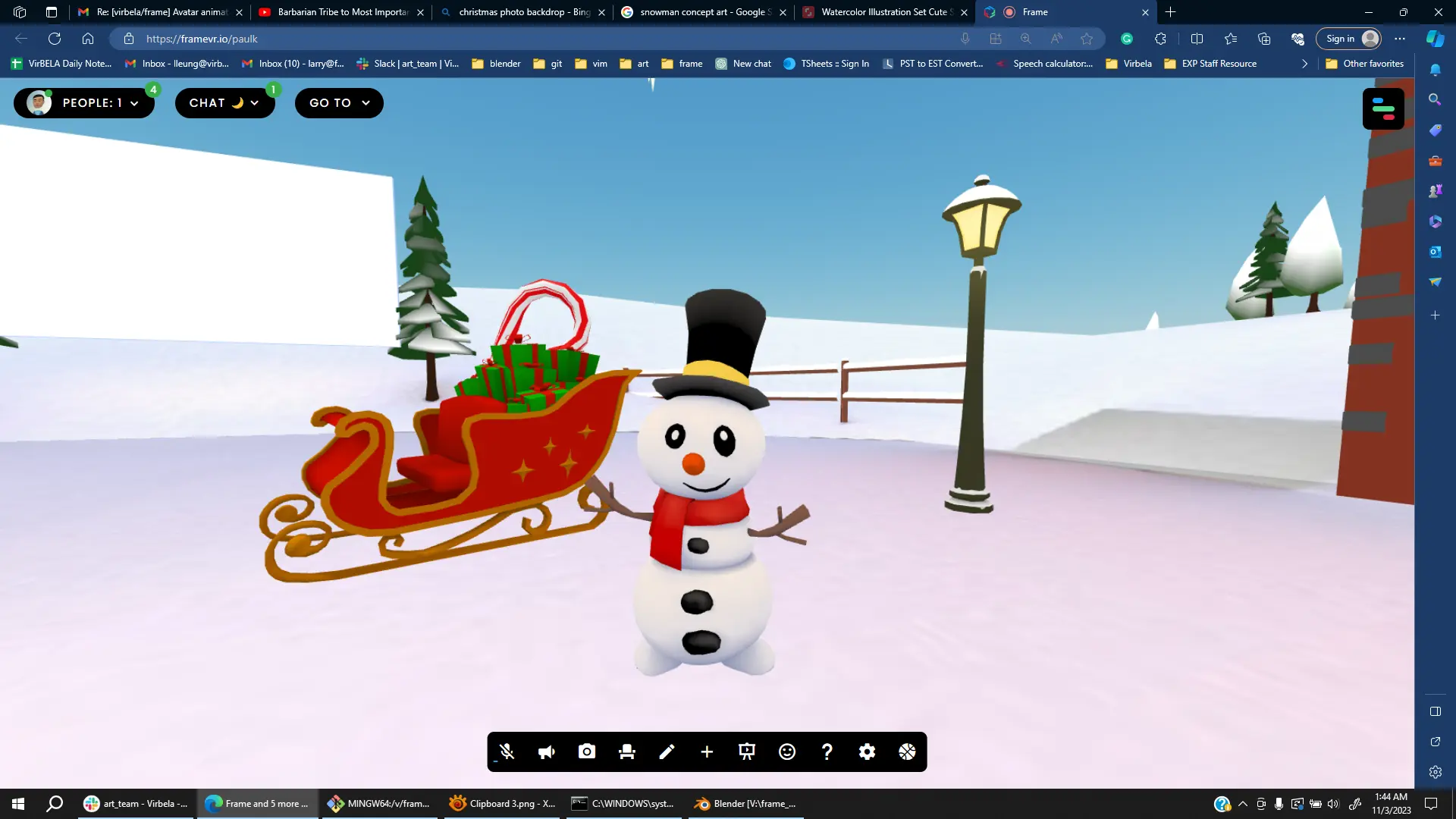
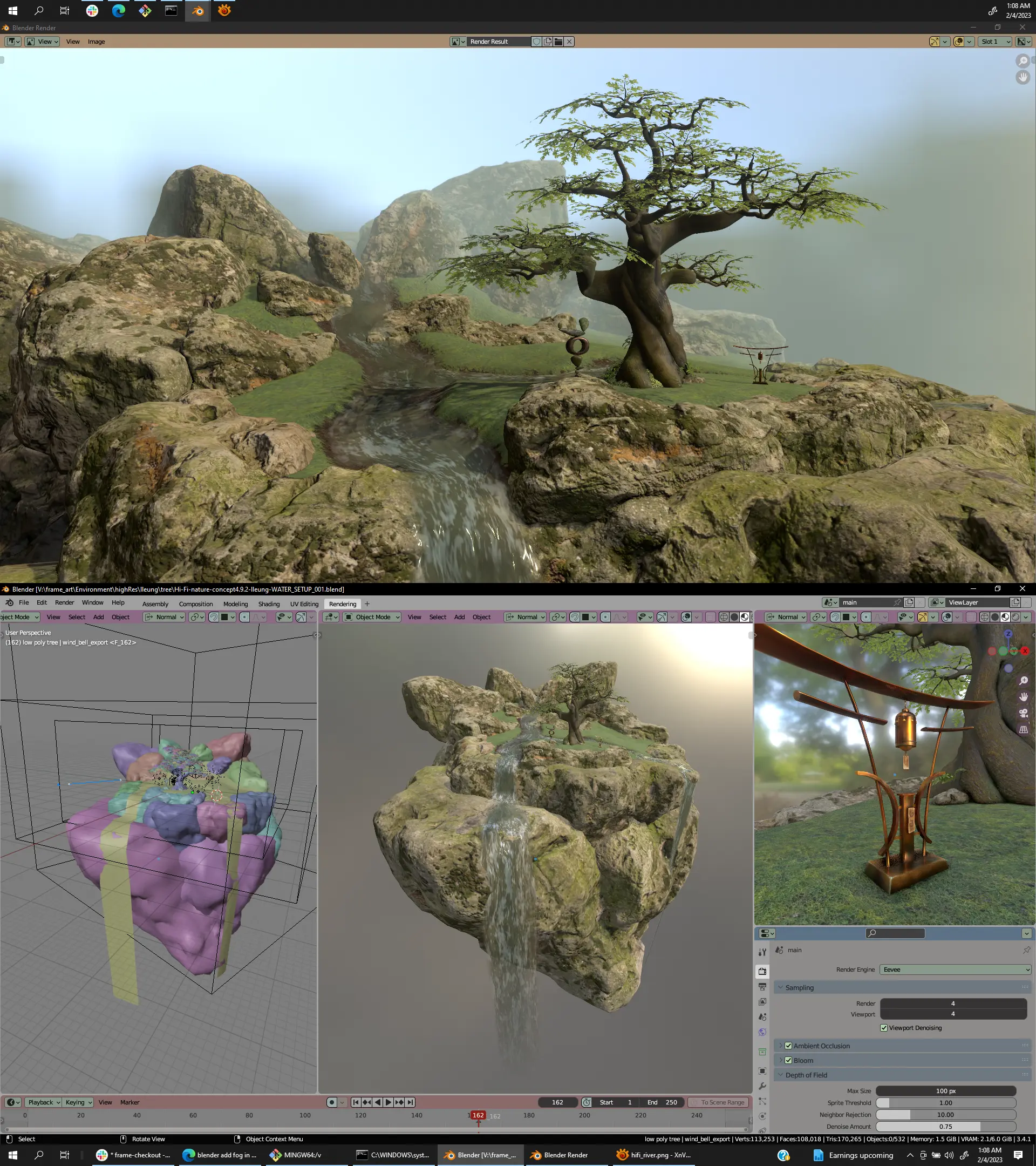
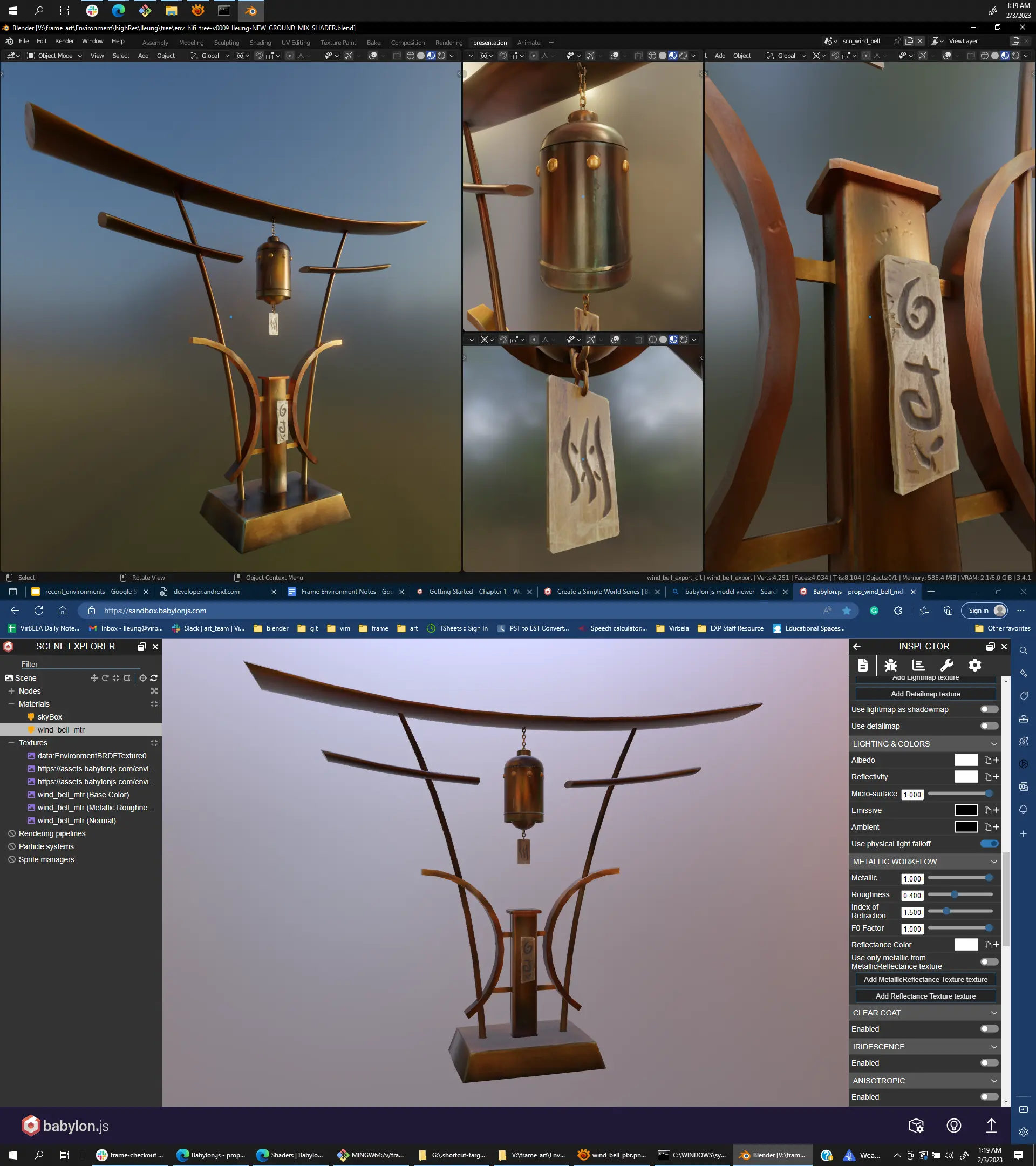
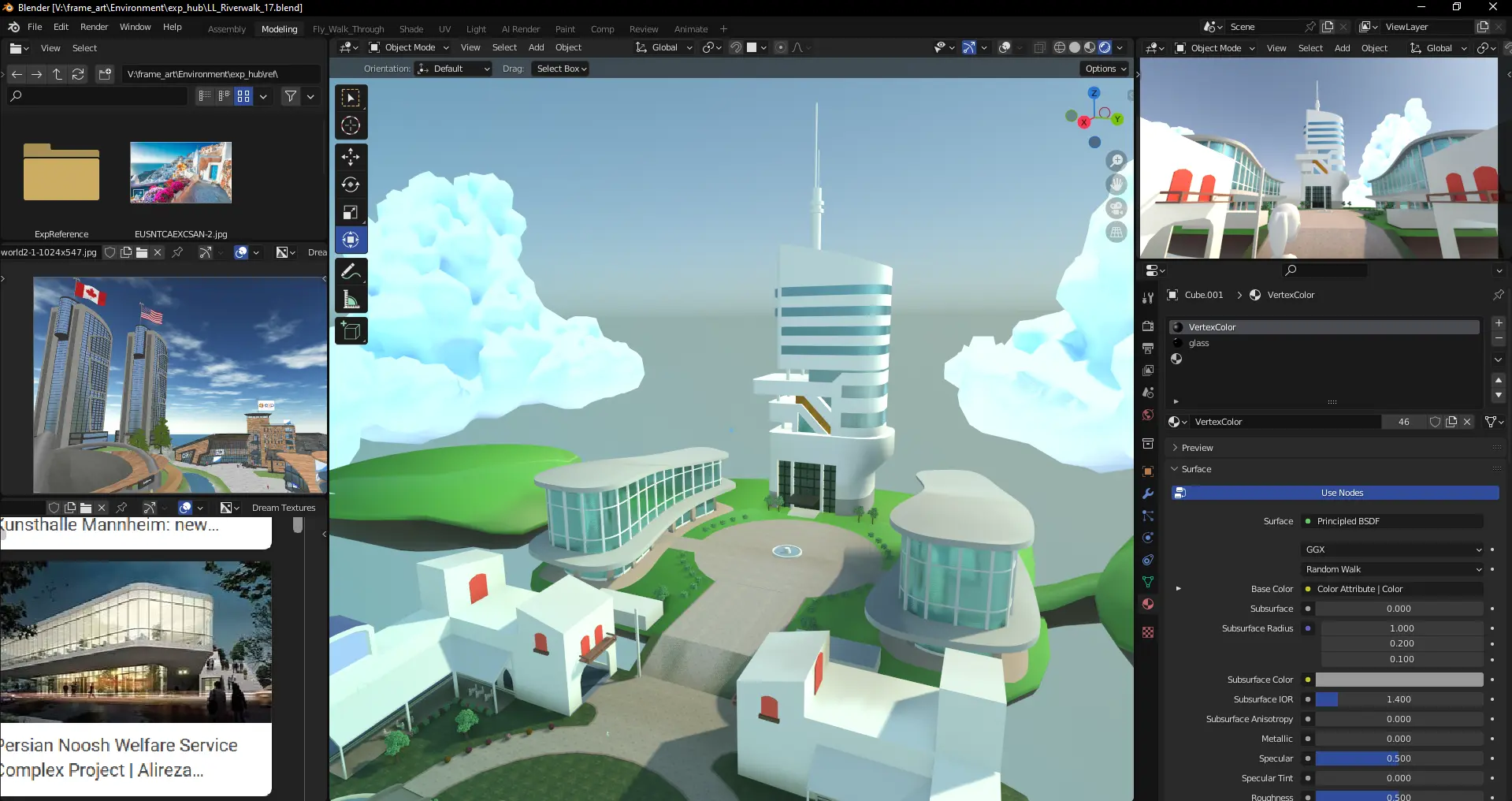
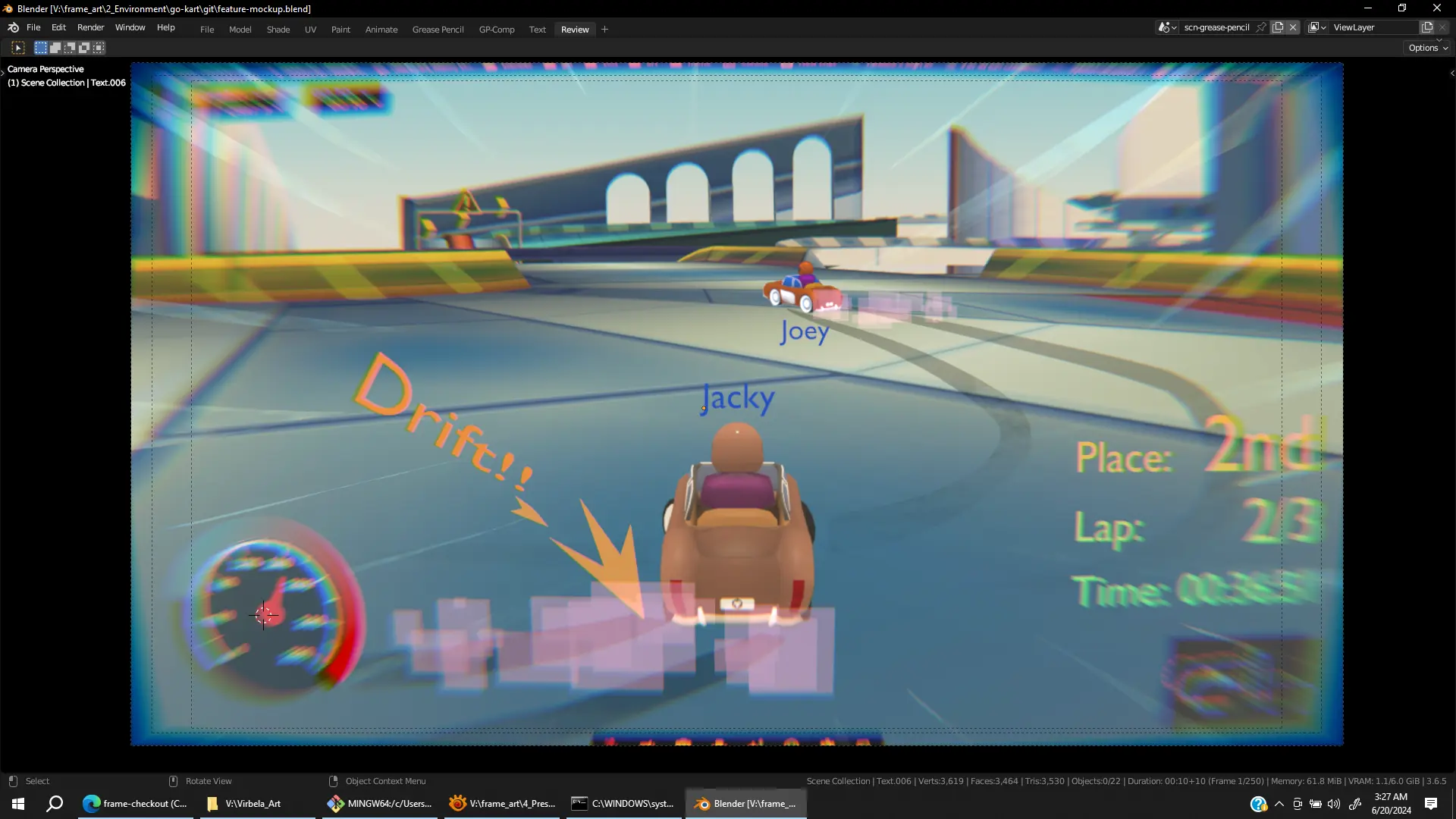
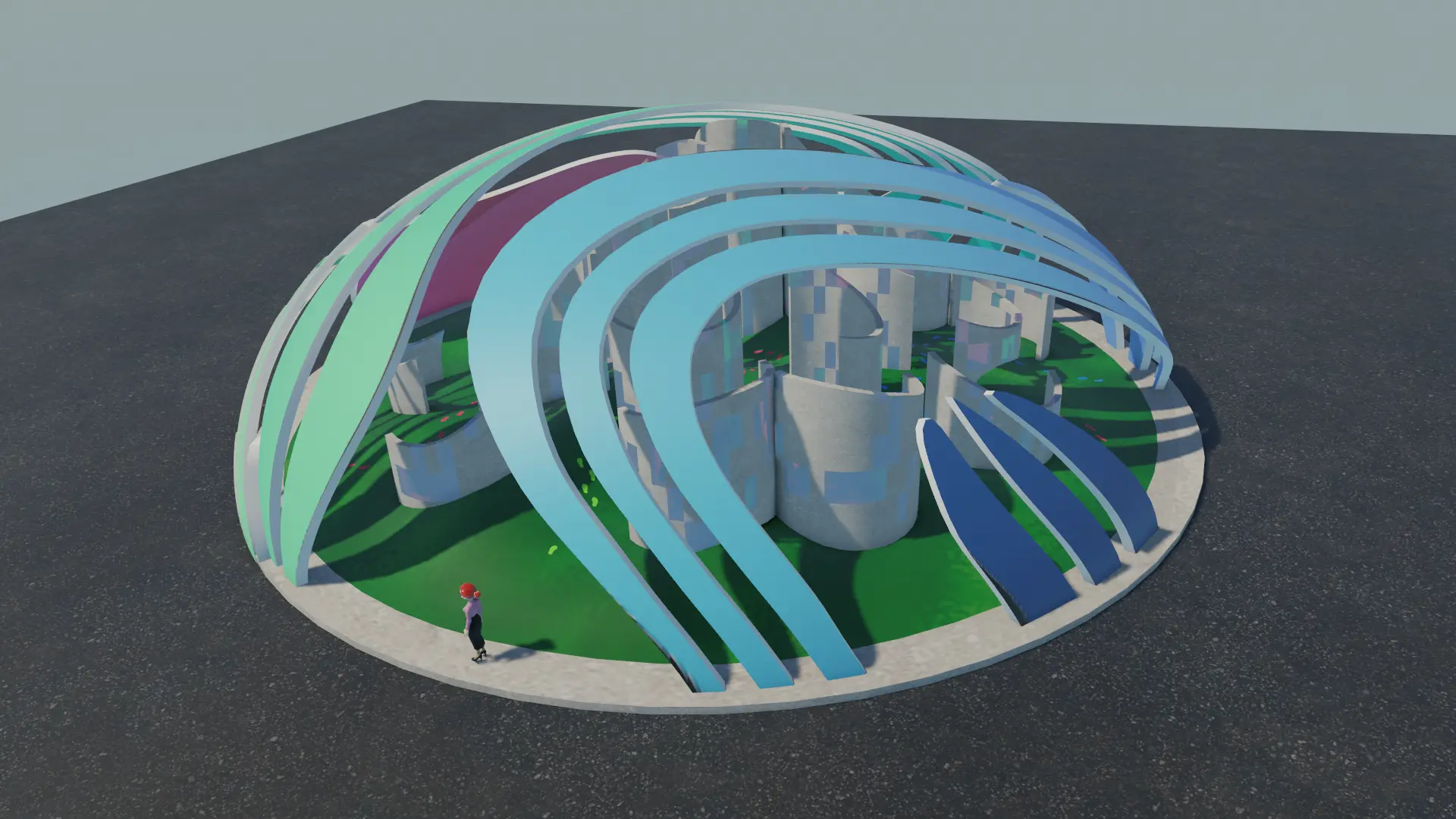
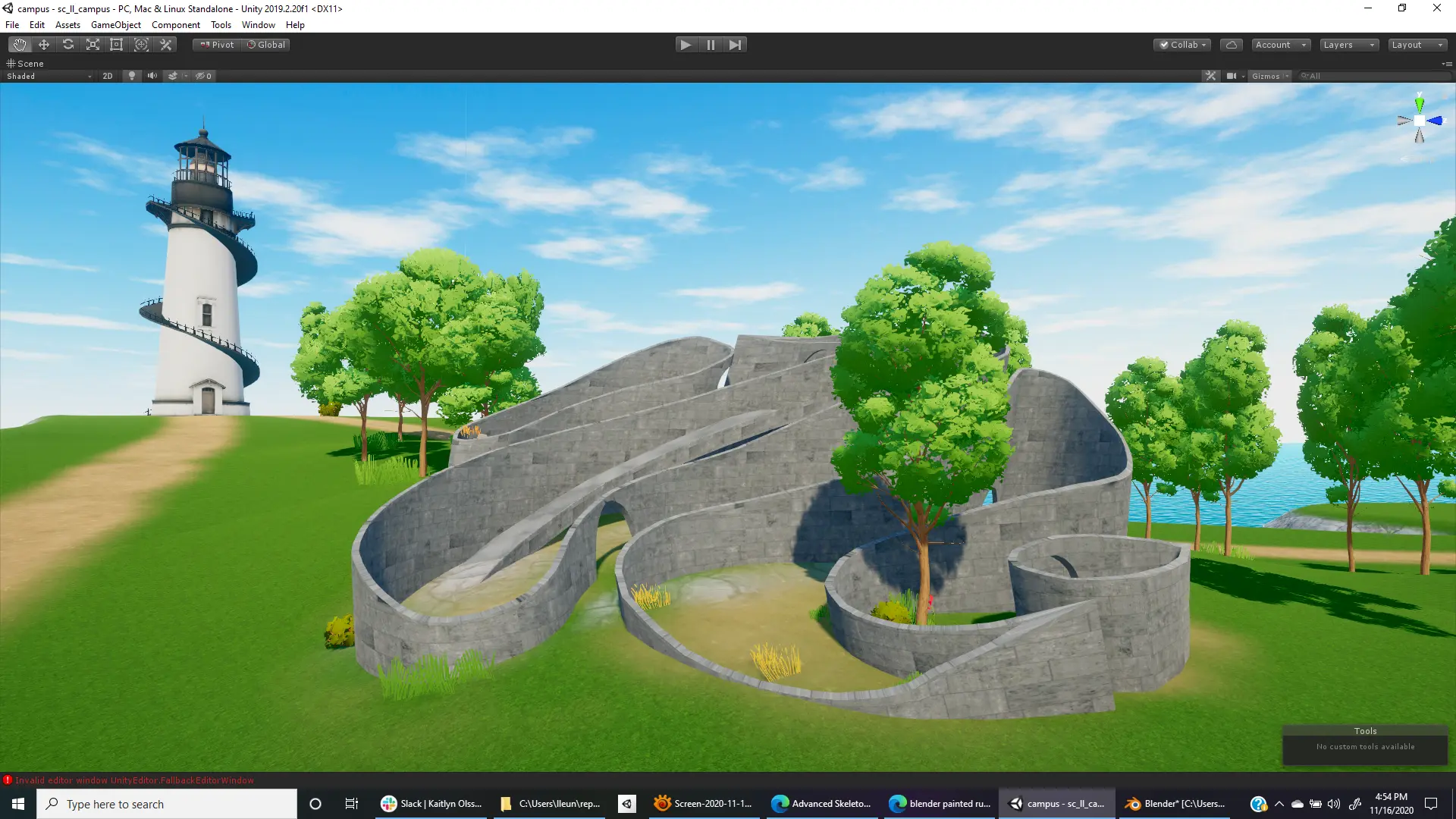
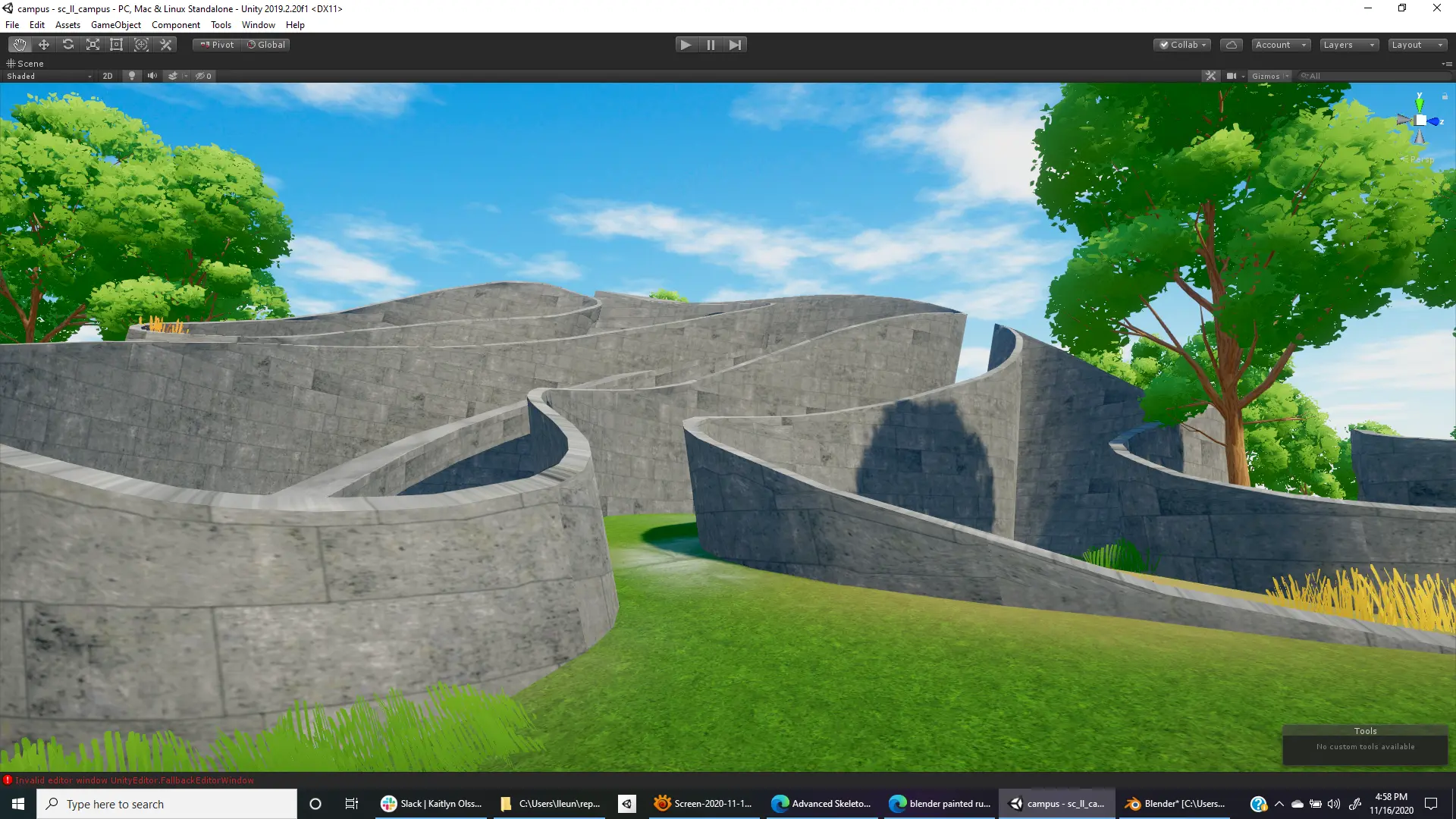
FrameVR is a browser based metaverse platform. I was brought on as one of the artist to help develop the look and feel of the platform. This involved creating avatars, environments, and props. I also helped to develop the art pipeline, style guide, and procedural tools.
↓avatars:
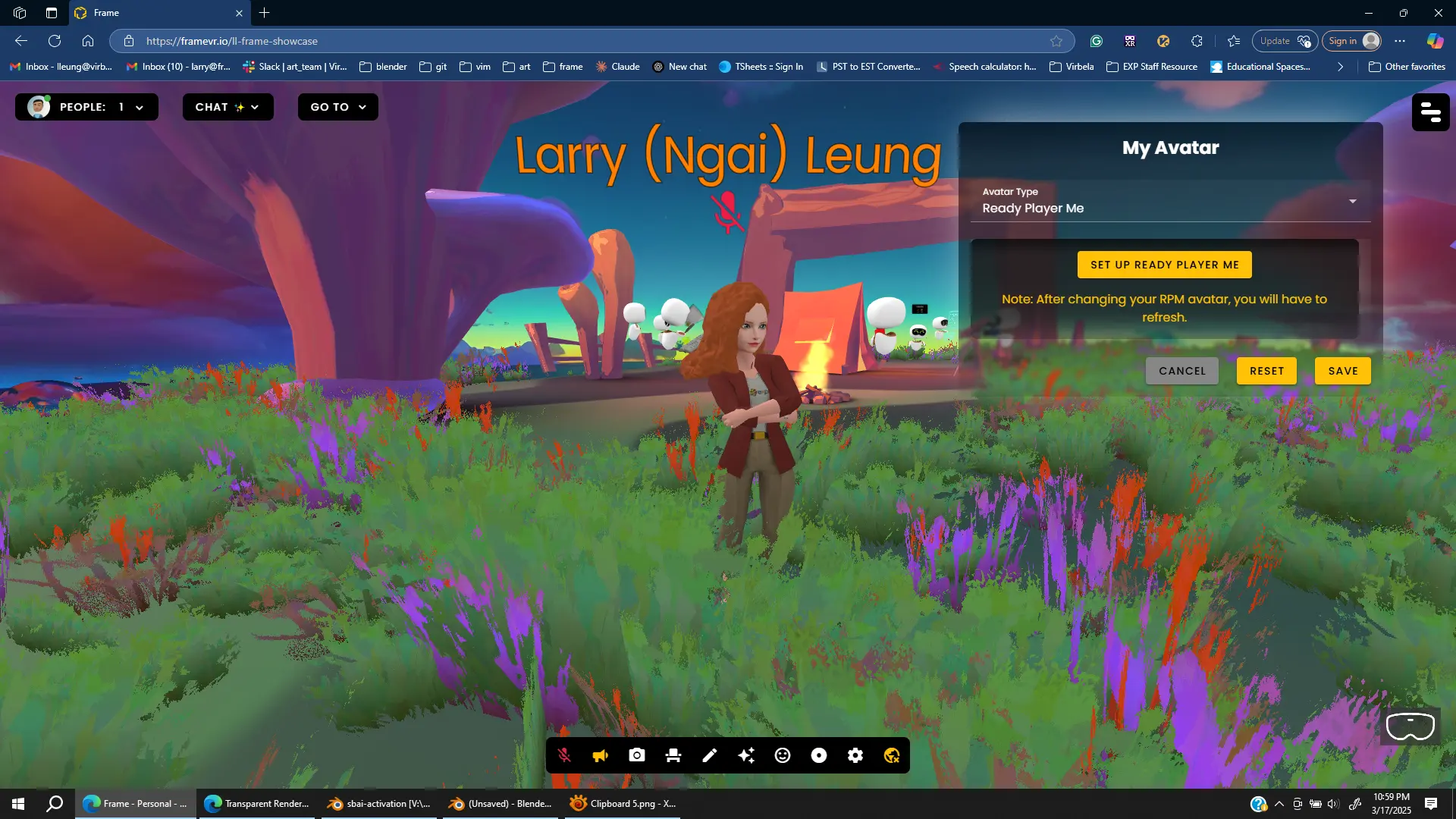
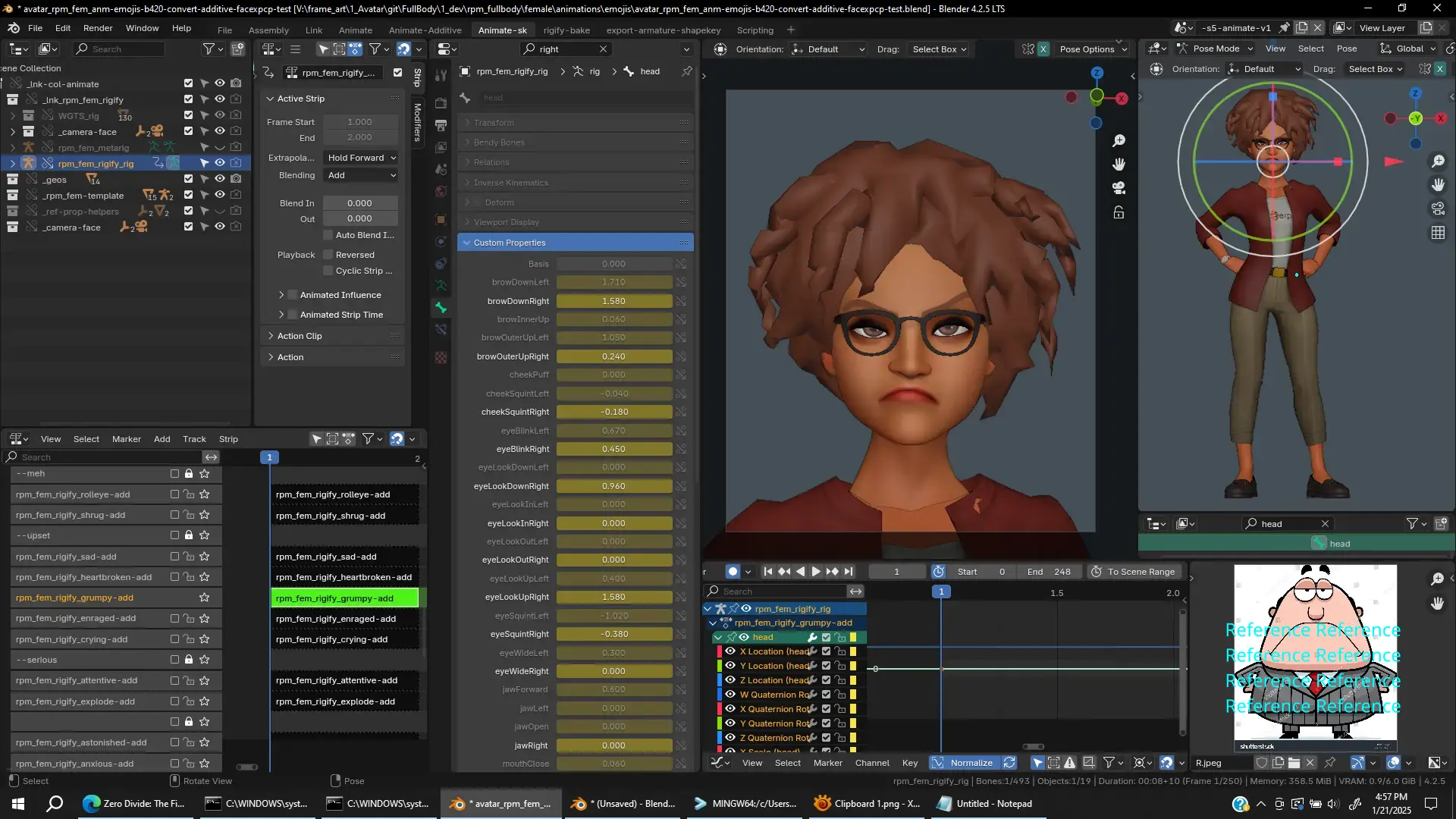
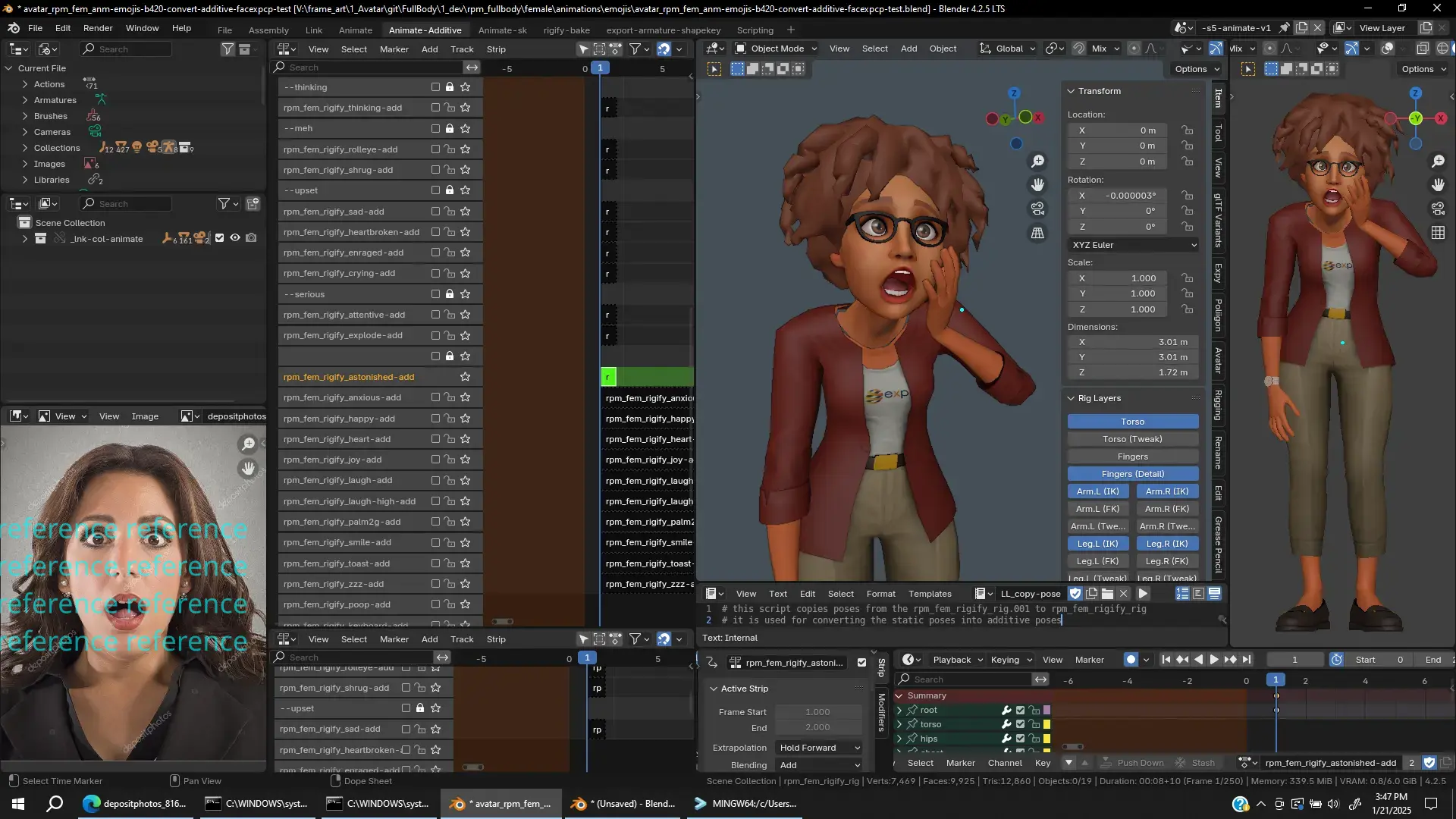
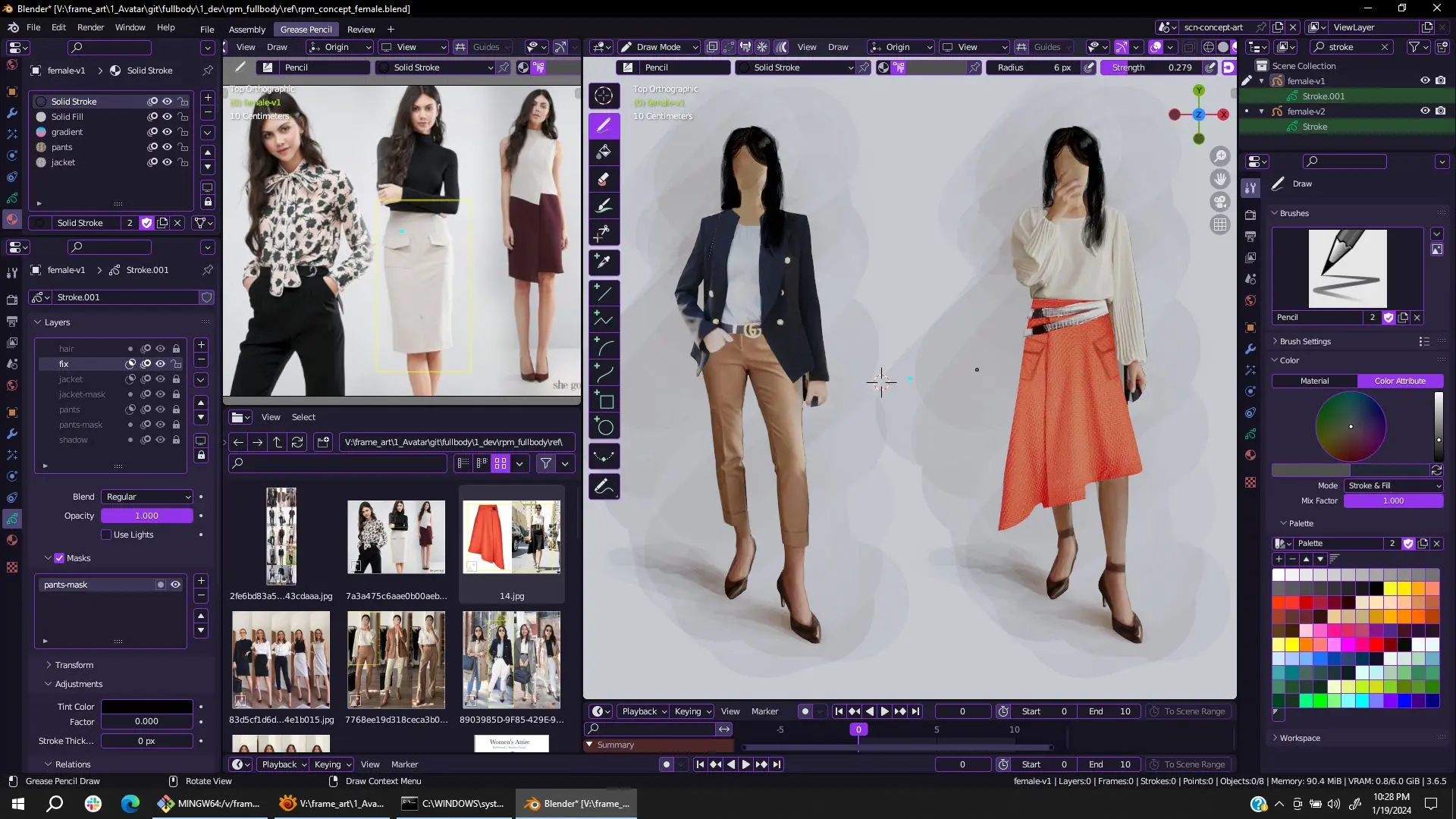
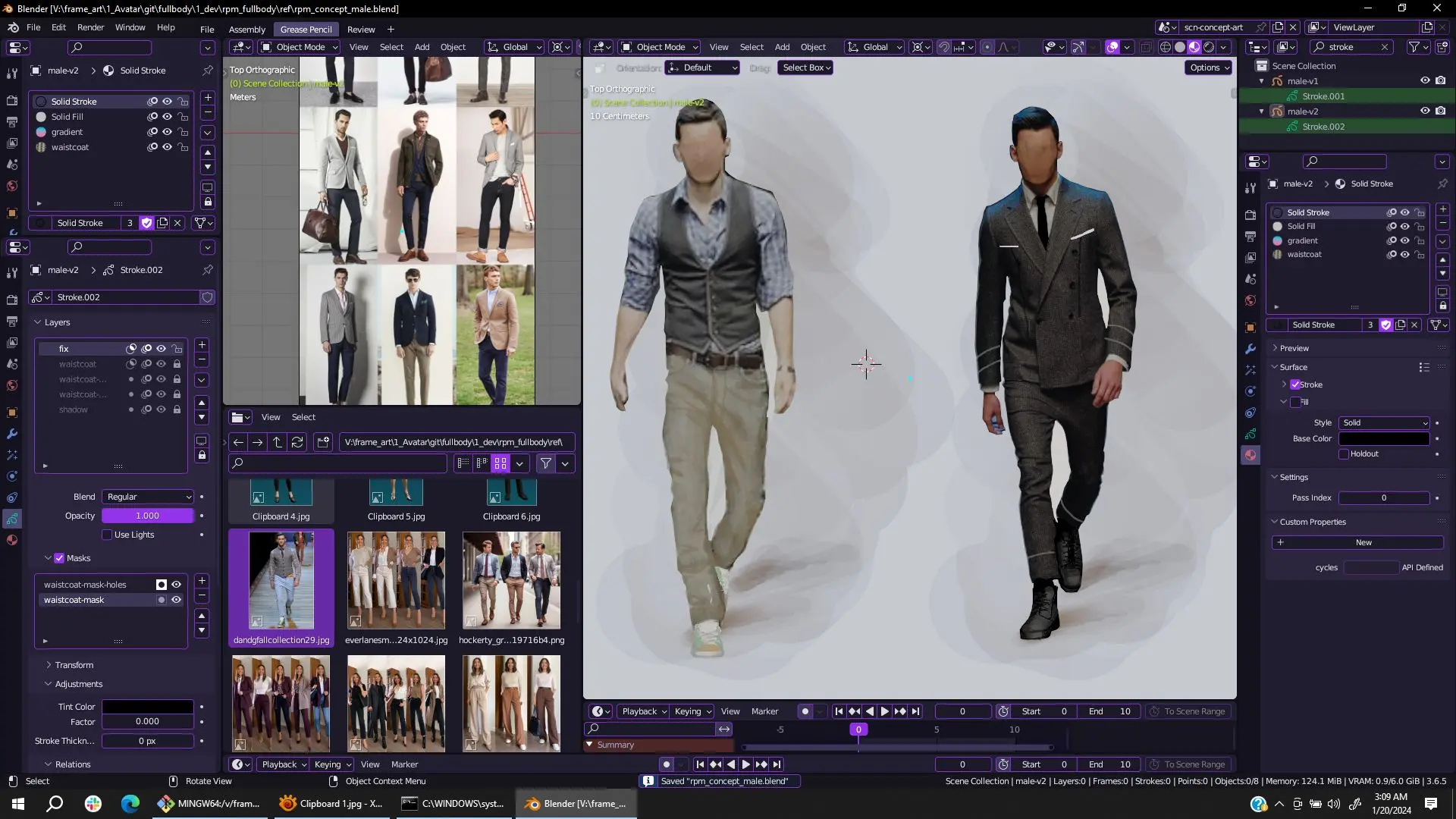
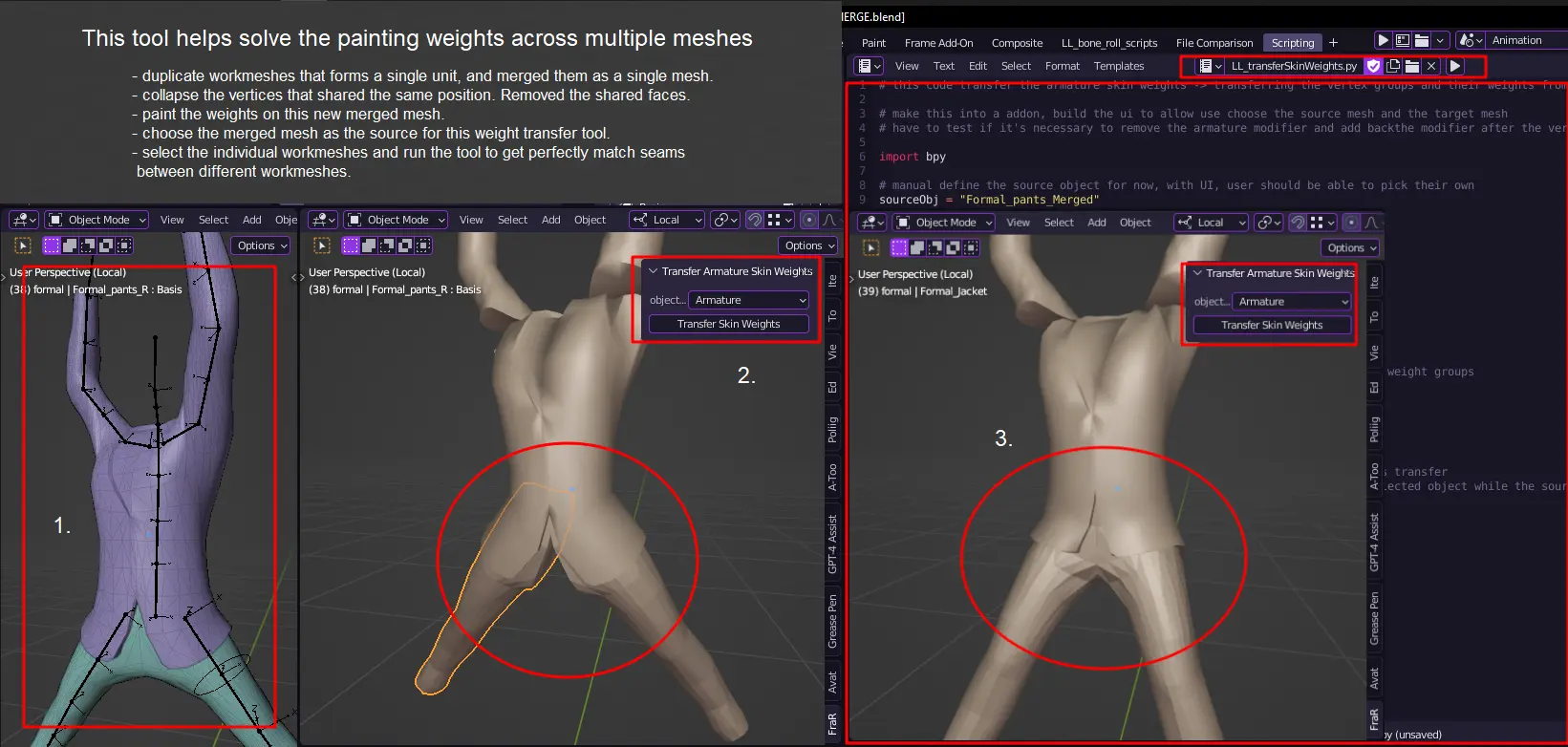
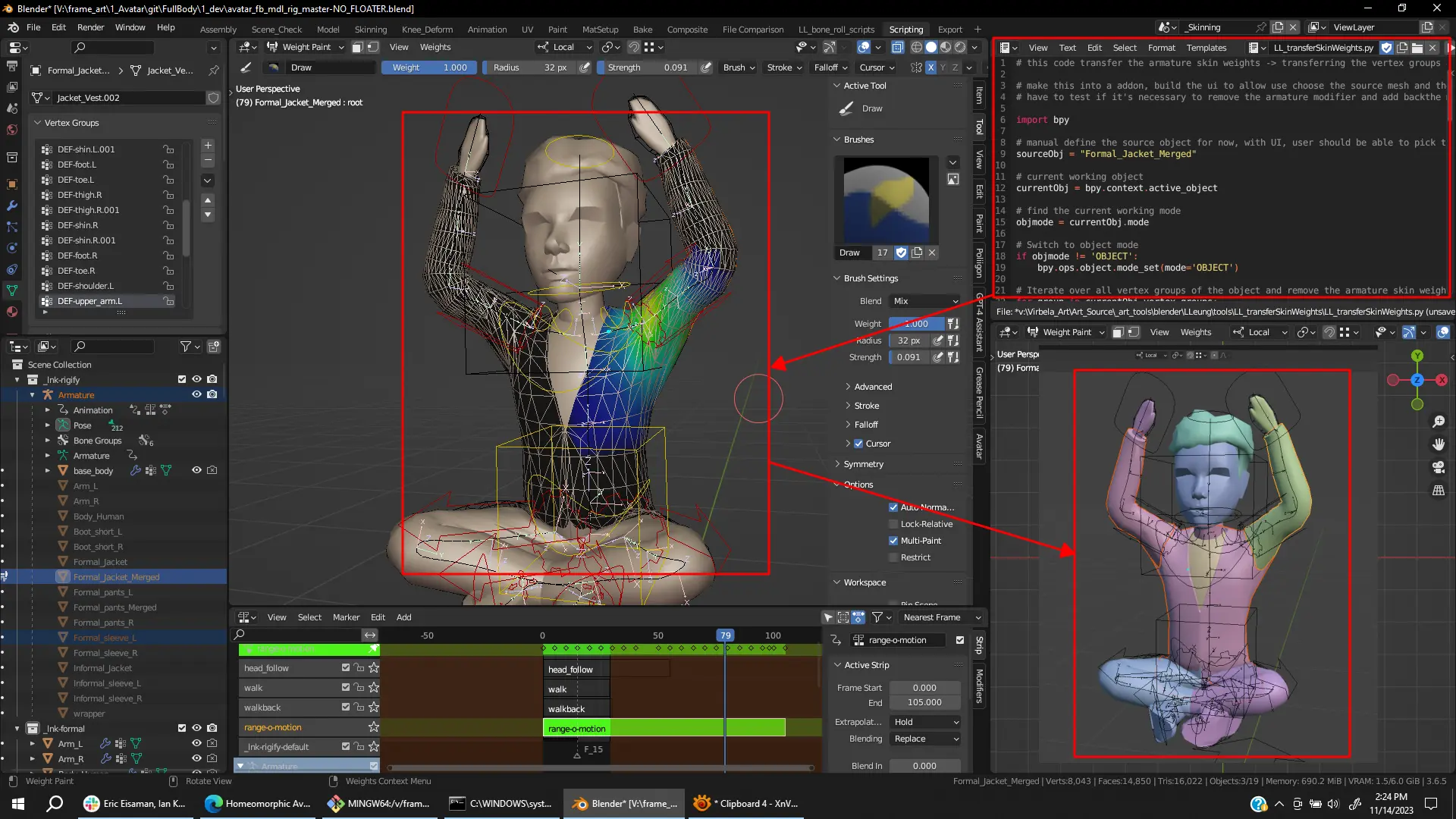
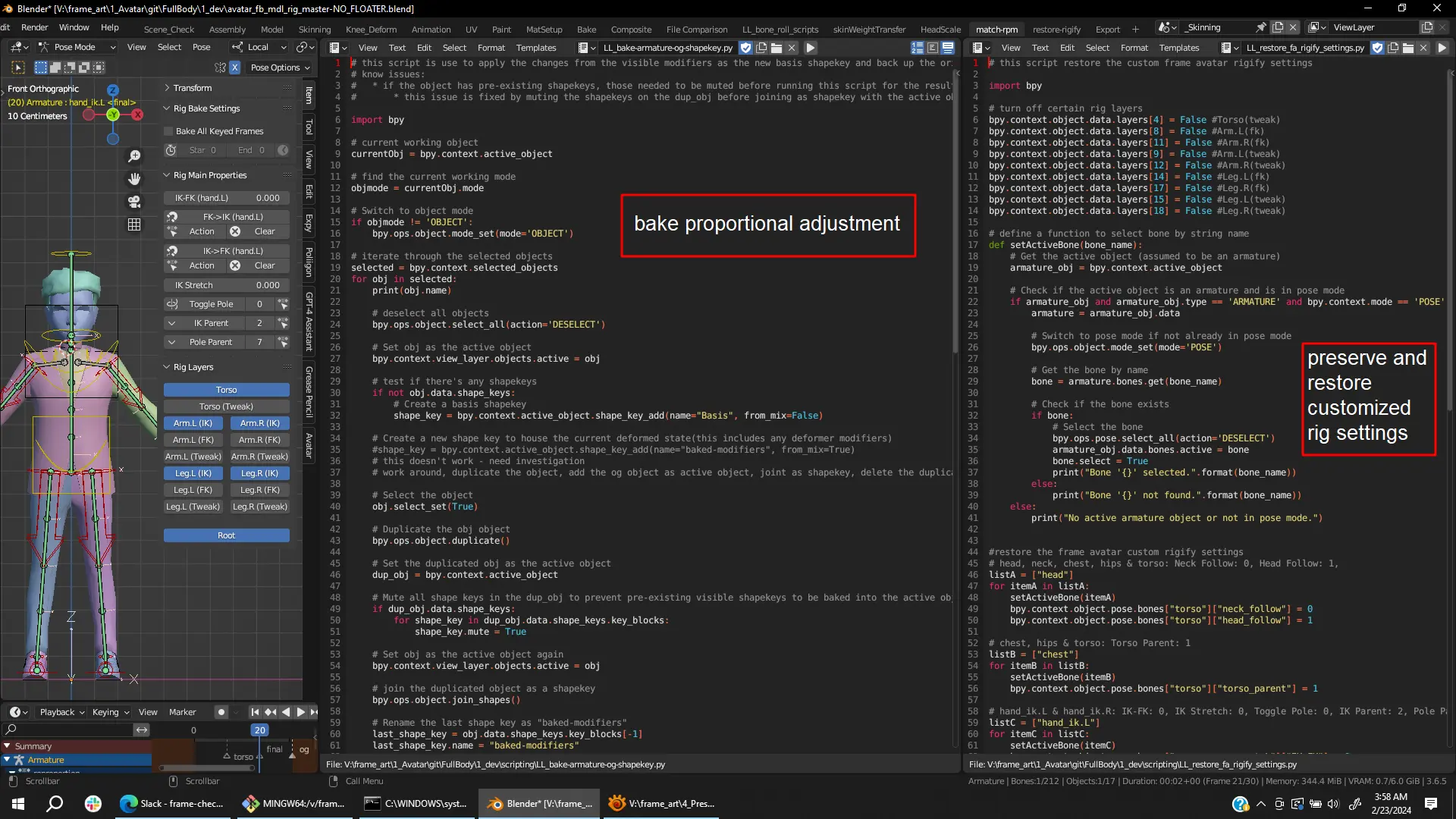
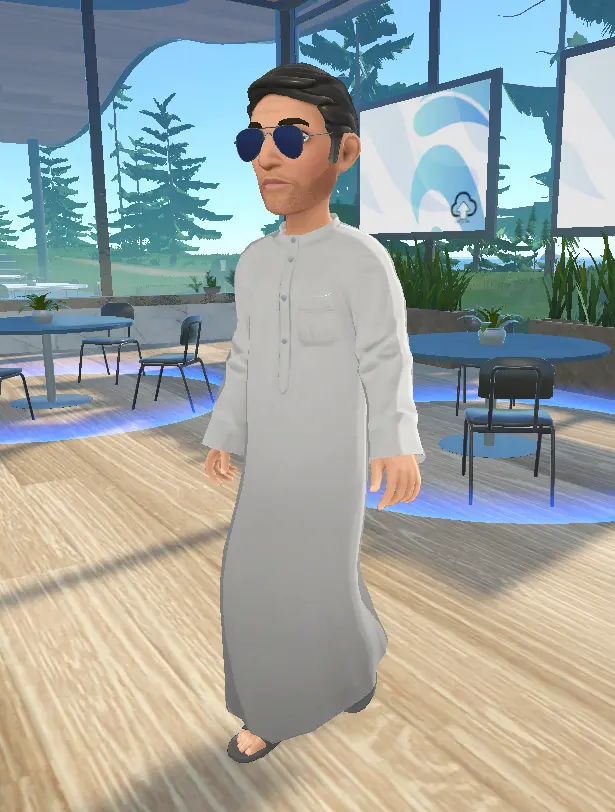
In FrameVR you have the choice to pick avatars provided by the Ready Player Me service. However, their proportion is unique and was quite different from FrameVR's native avatars. Leveraging Blender's rigify addon, I created a rig for this avatar type with additional features: Facial shapekeys animations from the 3rd party source model can be baked out and use in FrameVR. The rig handles a hybrid of mocap and hand-keyed animation. For consistency, I crafted a non-destructive proportional adjustment setup that matches the Ready Player Me avatar to the height and proportion of the in-house developed avatars. A robust file linking system was established that keeps rigging and animation development separate - offering a smooth animation process with minimal downtime between each rig feature updates, akin to the workflow practiced in big studios. Simple and useful face cam setup for facial performance was established as well.
↓AI bot assistant development:
This is Chipu, an AI assistant bot powered by the current popular LLMs. You can interact with it in FrameVR's metaverse environment. While my team have crafted the approved concept and the model, I worked on the body and facial rig, materials, and animations.
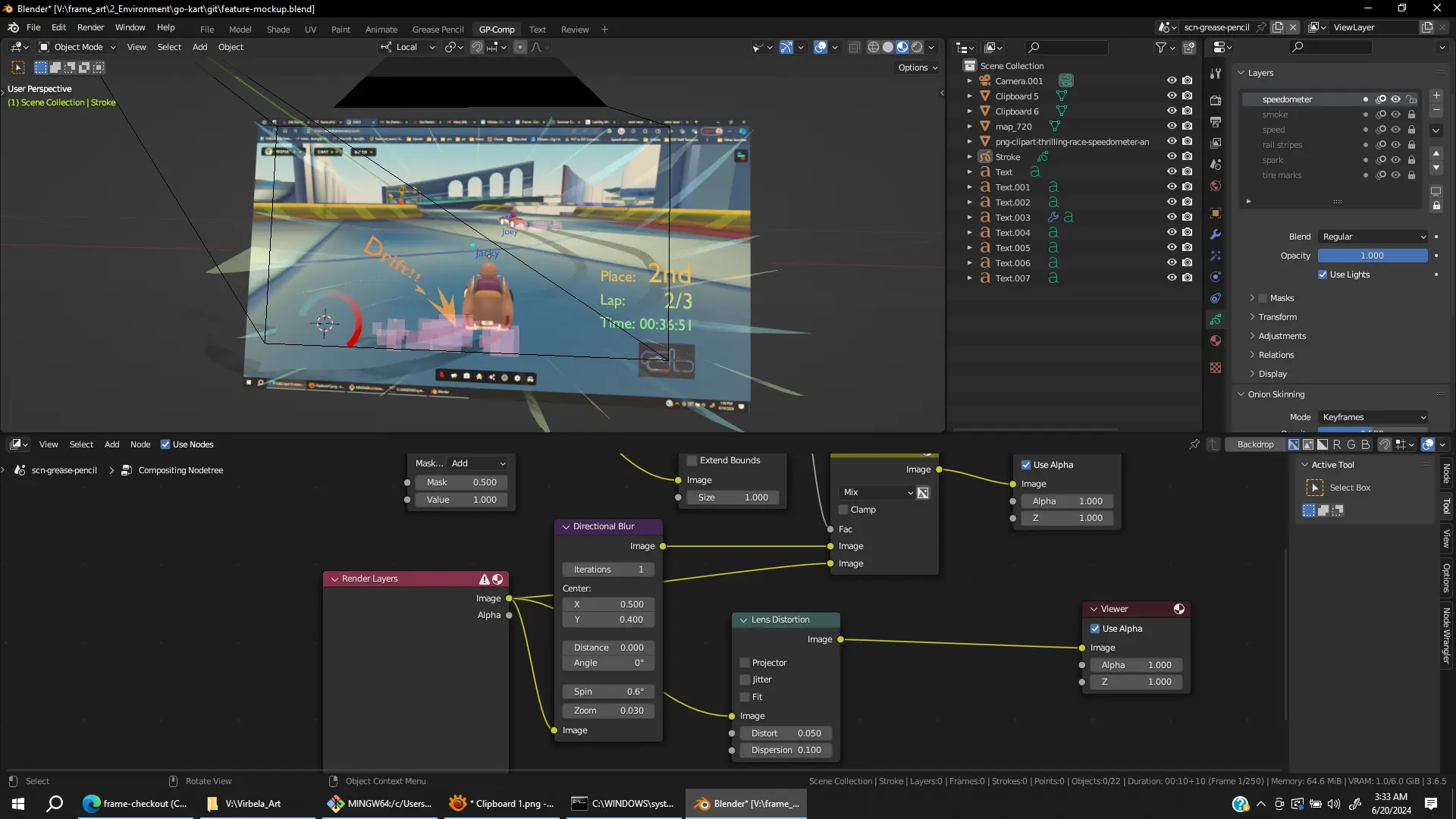
Early concept exploration of the AI bot in FrameVR. Some of the early concept uses 2d drawings as well as this one using Blender's geometry nodes.
This video demonstrates some code I have written to generate a house plant asset procedurally and running in a BabylonJS Playground. Every time the webpage is reloaded, a new plant object is created with randomized and unique number of leaves, branches, height, size, and vase shape. I also incorporated code for ambient occlusion generation and baking on to the geometry as vertex colors for optimal performance.
This video showcase a simple chair asset built with code and running in a BabylonJS Playground. It calls on a node geometry asset and builds some gui sliders to procedurally adjust the various properties of the chair object.
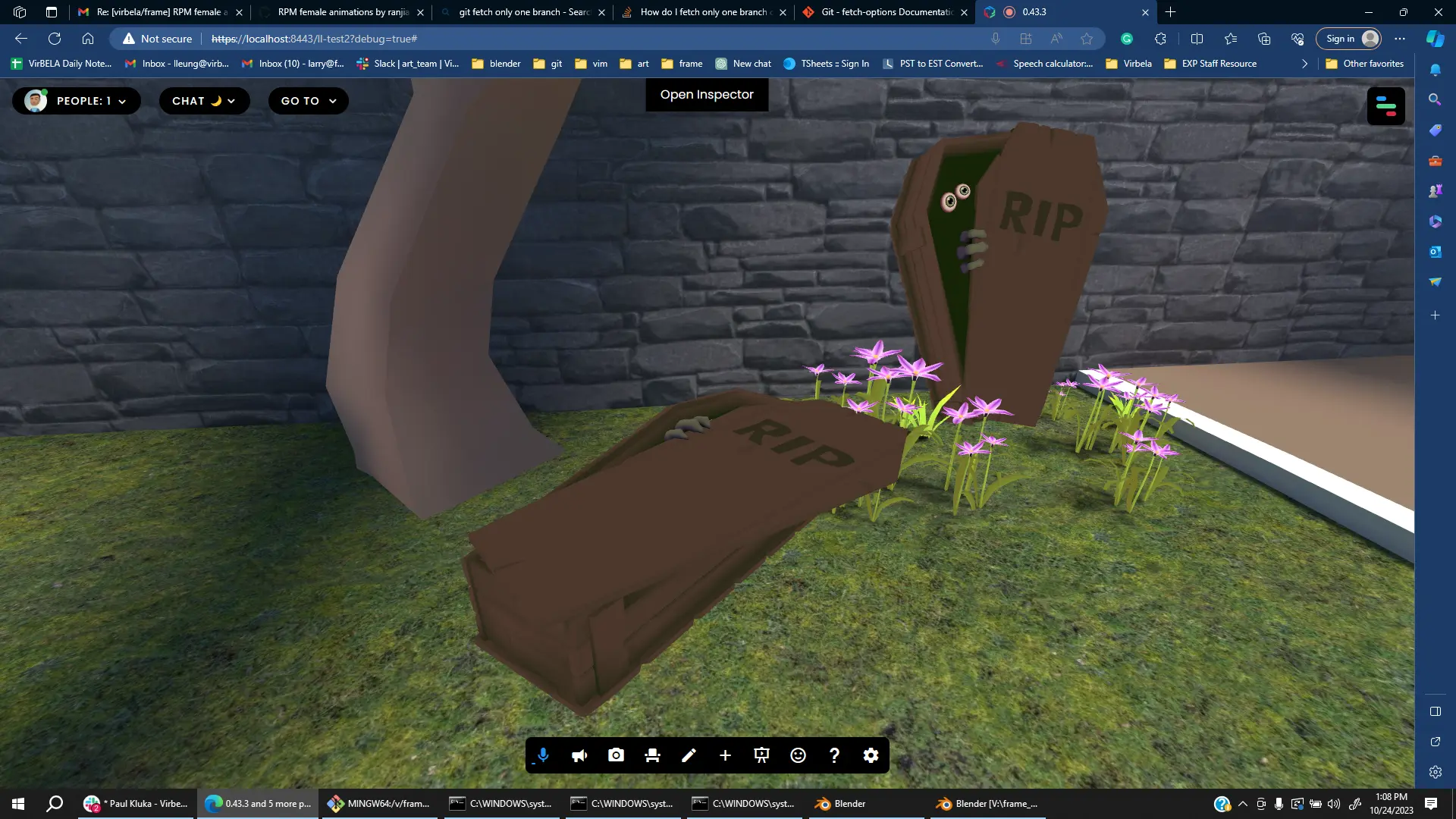
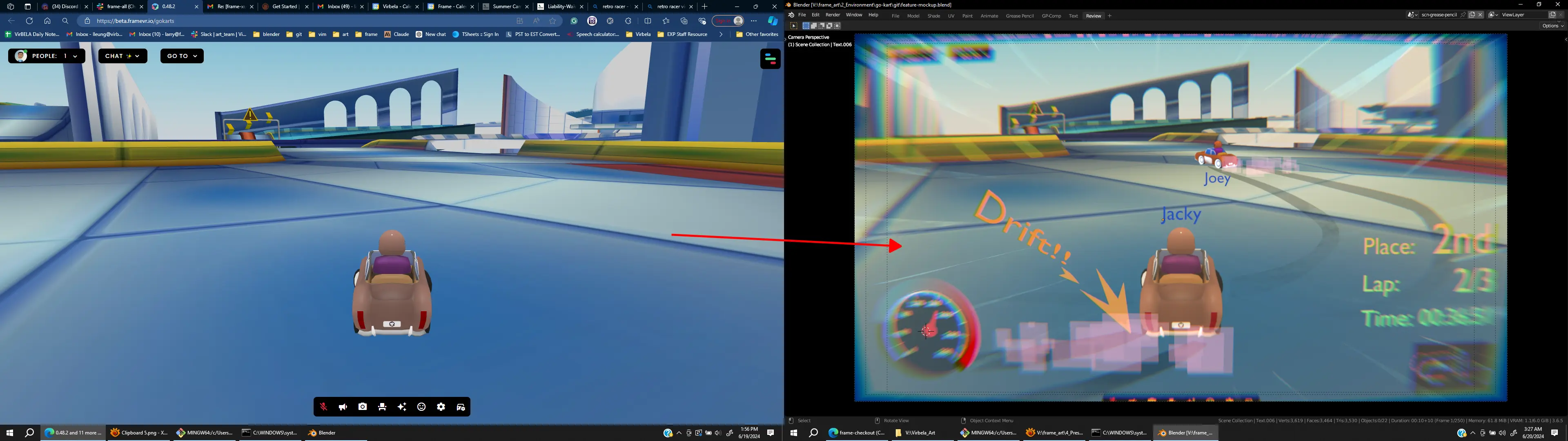
↓props and pre-vis concepts:
Virbela
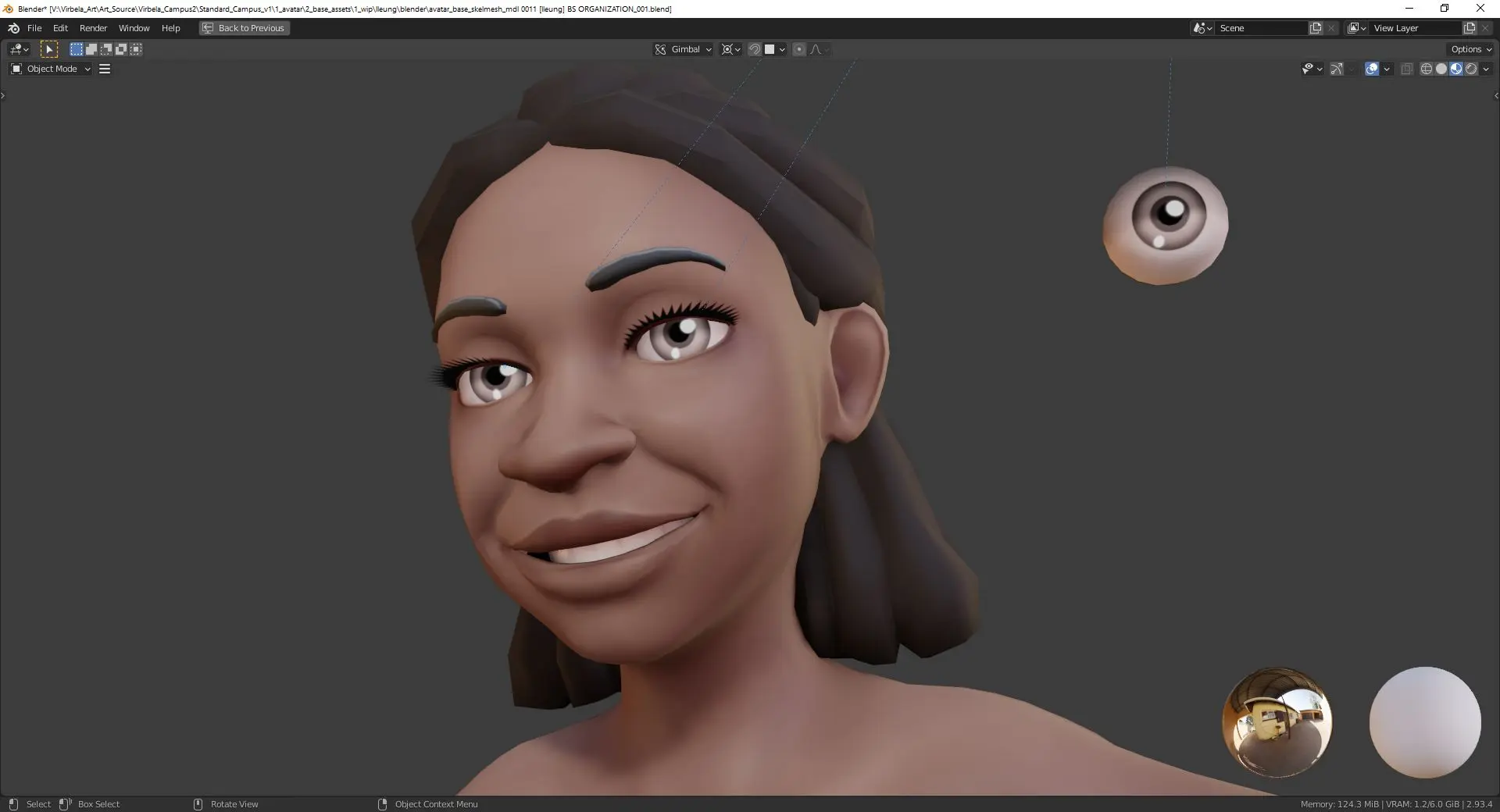
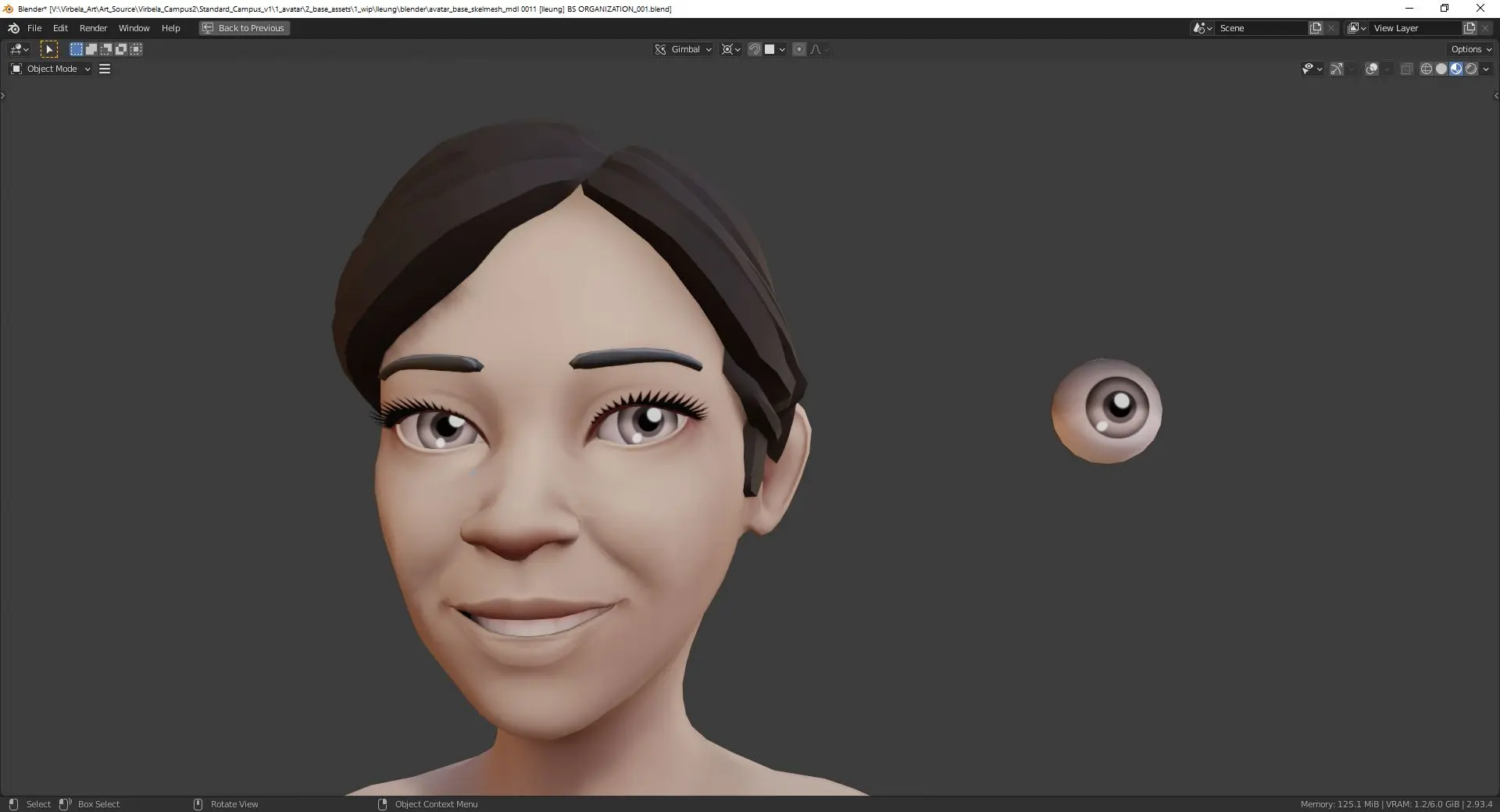
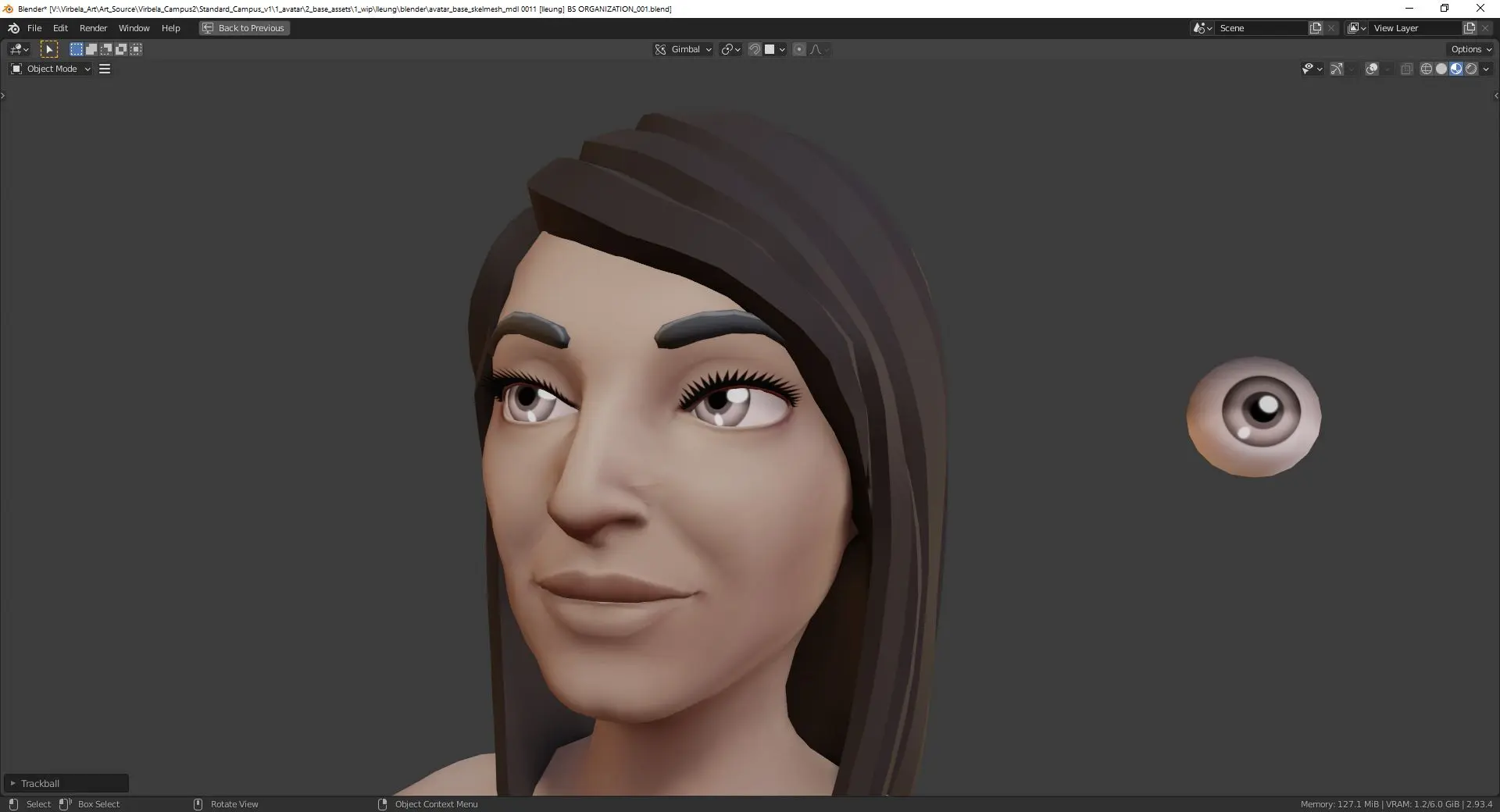
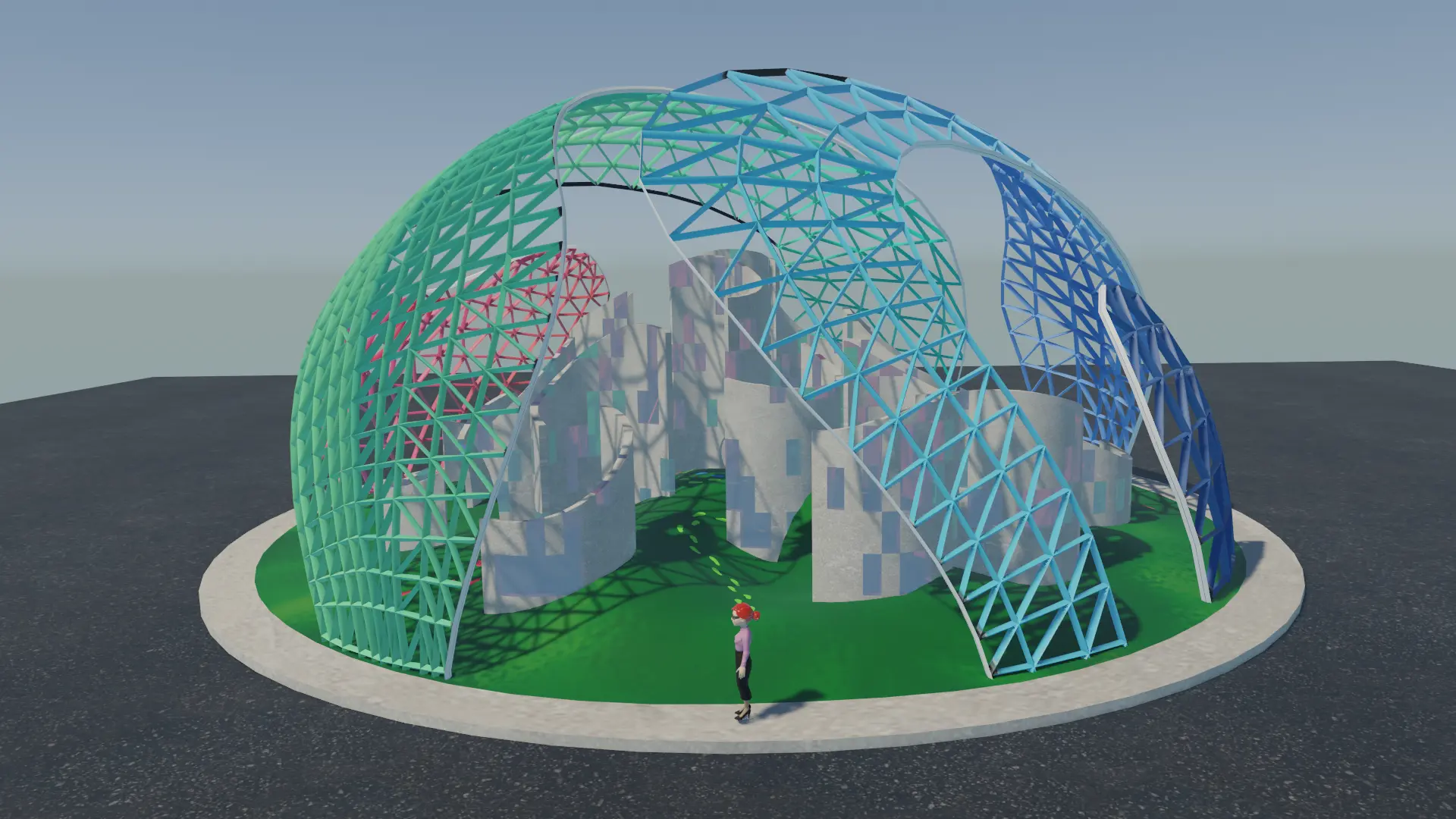
Virbela is a virtual world platform for remote work, learning, and events. I contributed to the development of the pipeline, rigging and animation work for the avatars, as well as the 3D environmental assets.
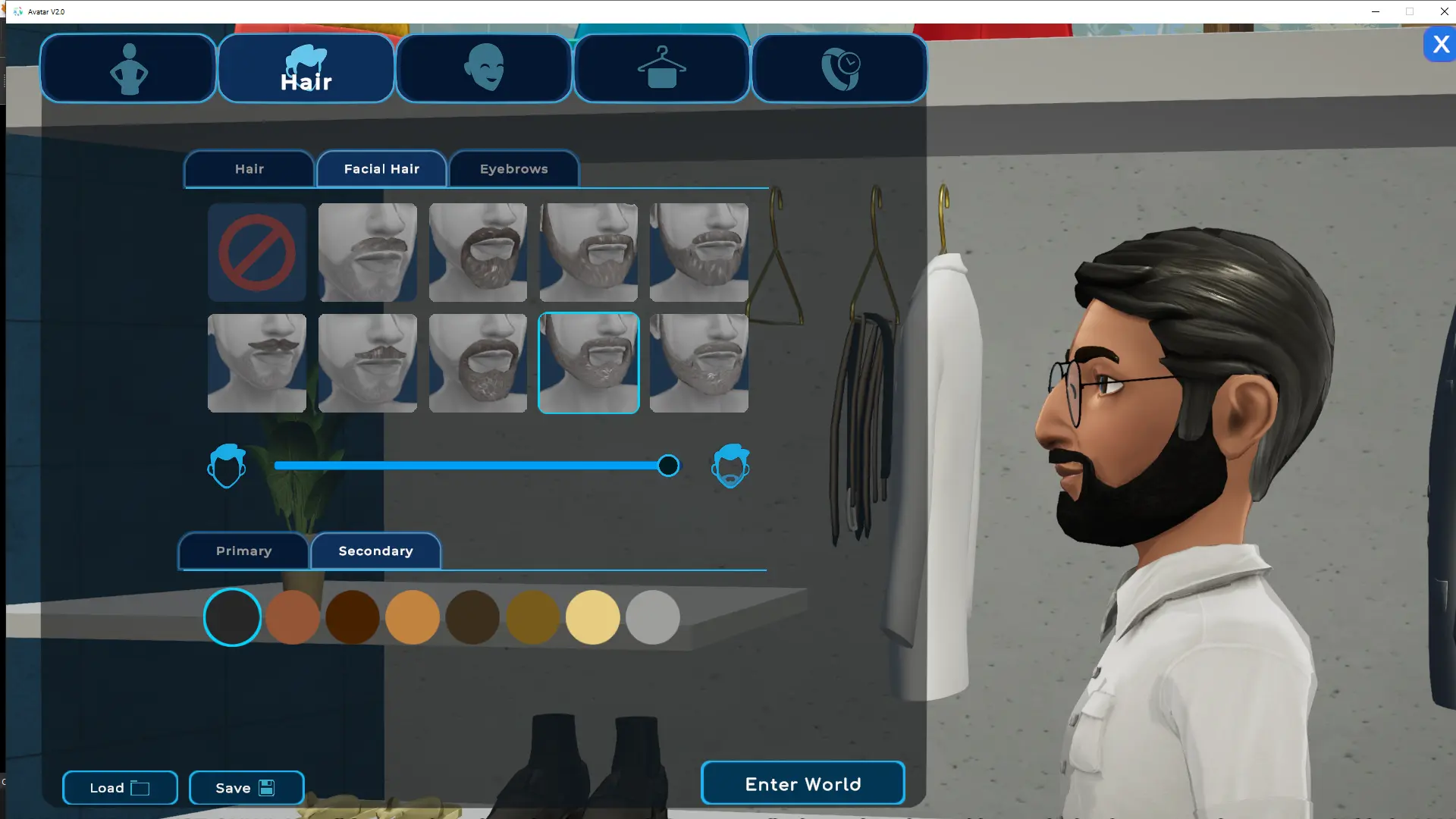
I help pushed the Virbela avatar customization options to allow for more diverse and distinguished facial features based ethnicity, nationalities, etc.
This video demonstrates the avatar and baked cloth bone setup built in Maya and exported to Unity, showcasing the technical implementation for character animation and faked cloth physics.
I made a tool in Maya to automatically take care of skin binding, weighting transfer, blendshape migration from the base body mesh over to the clothing geometries.